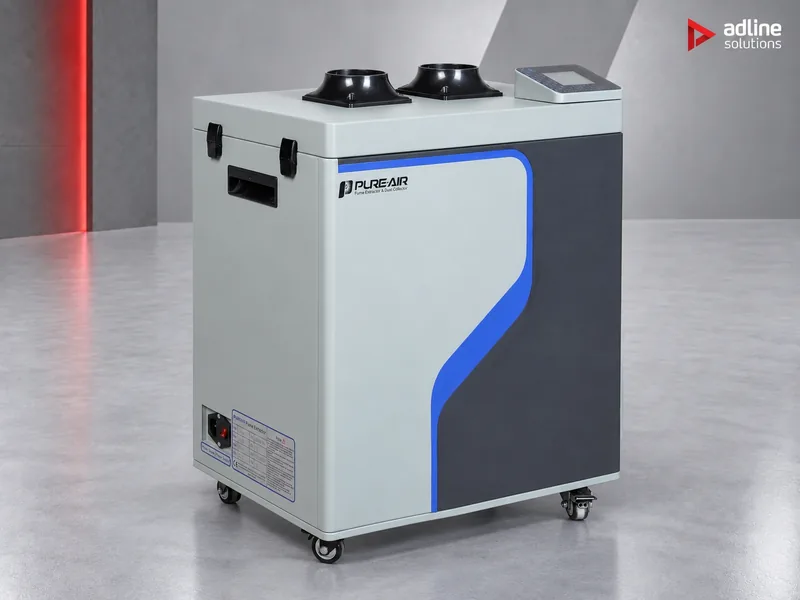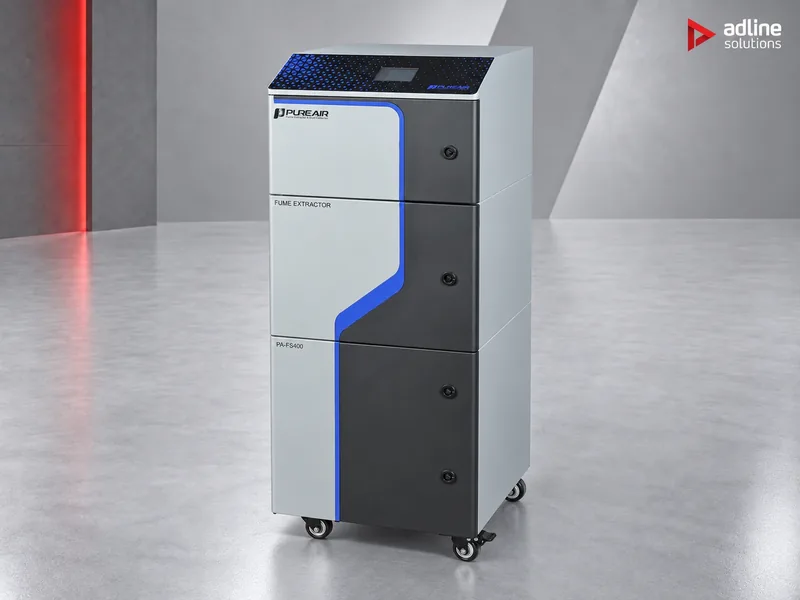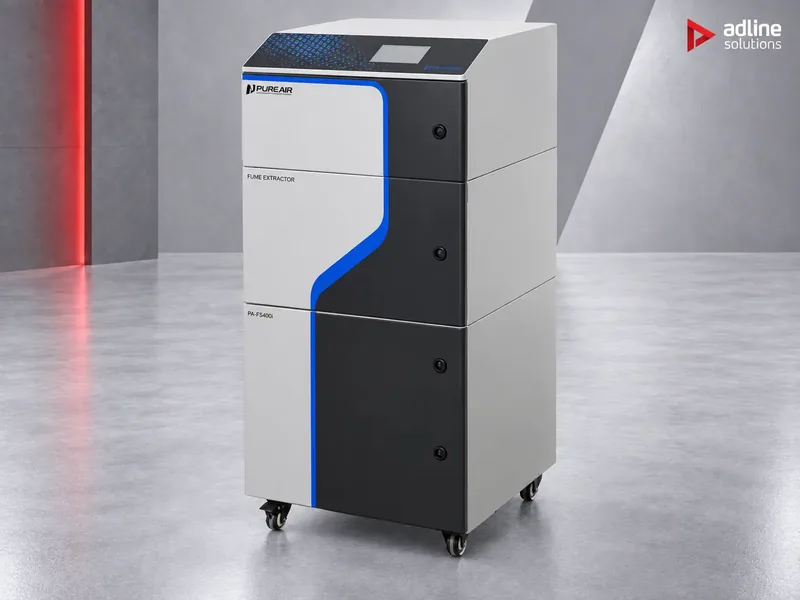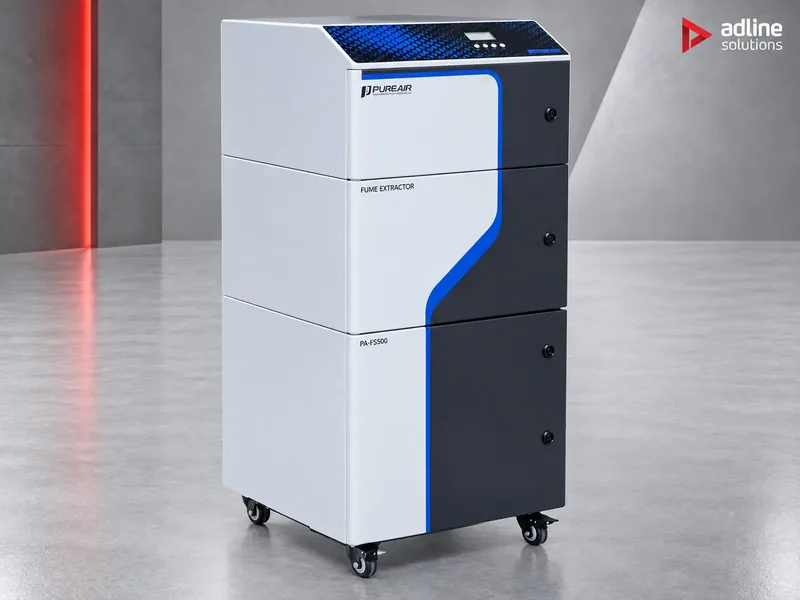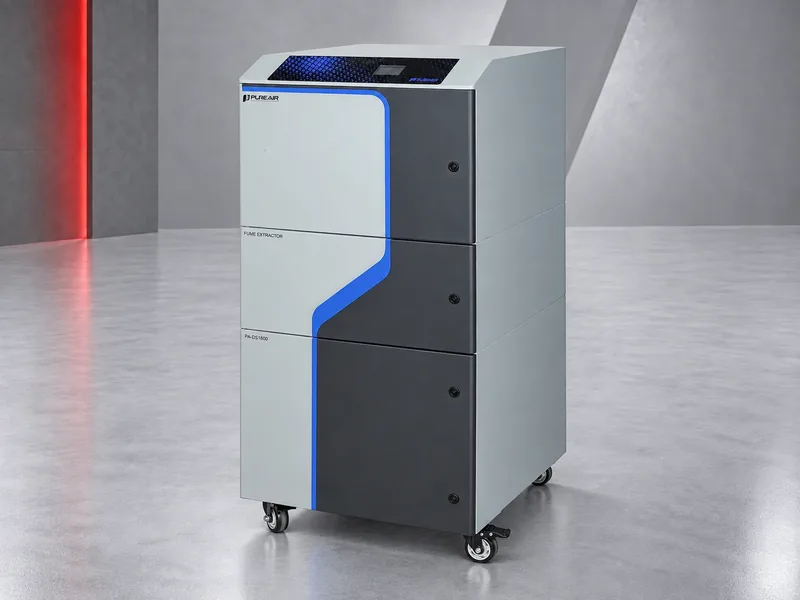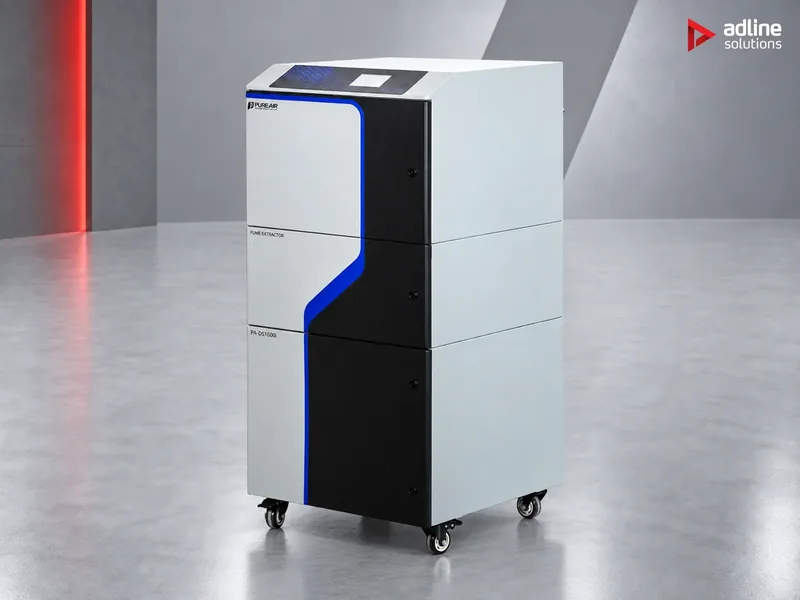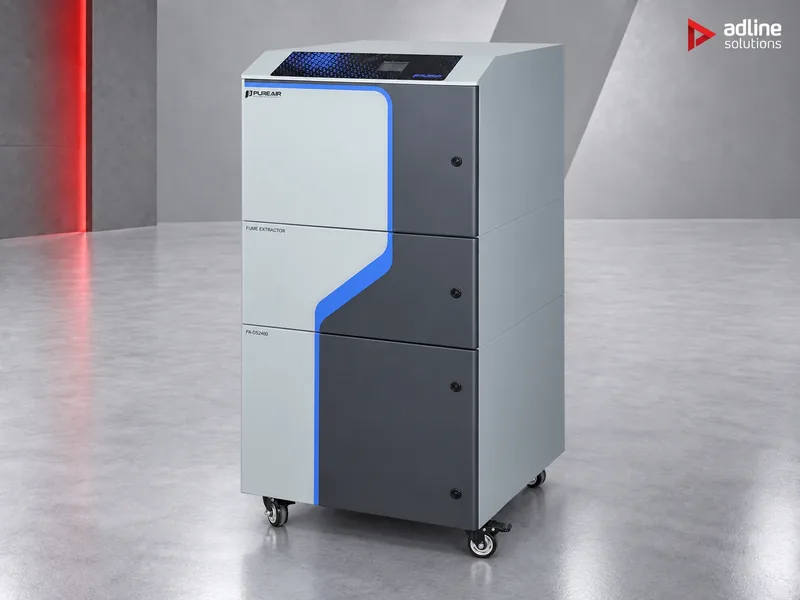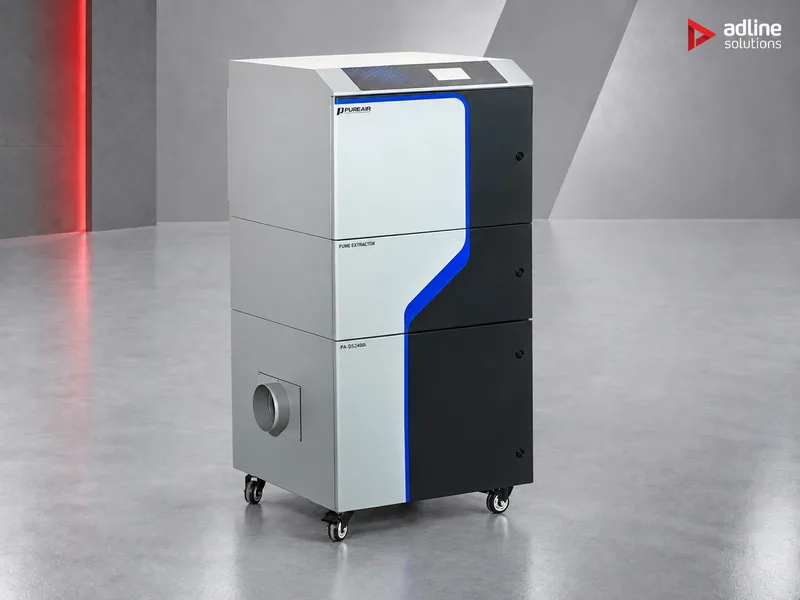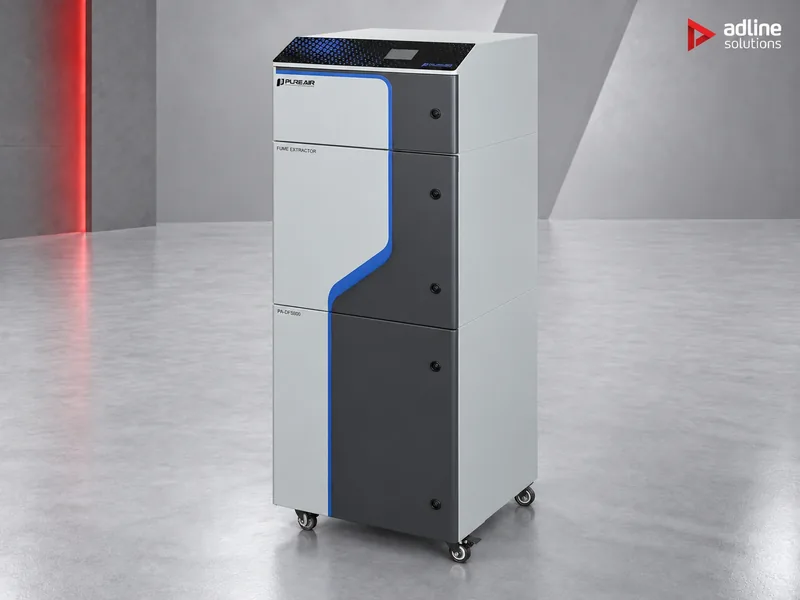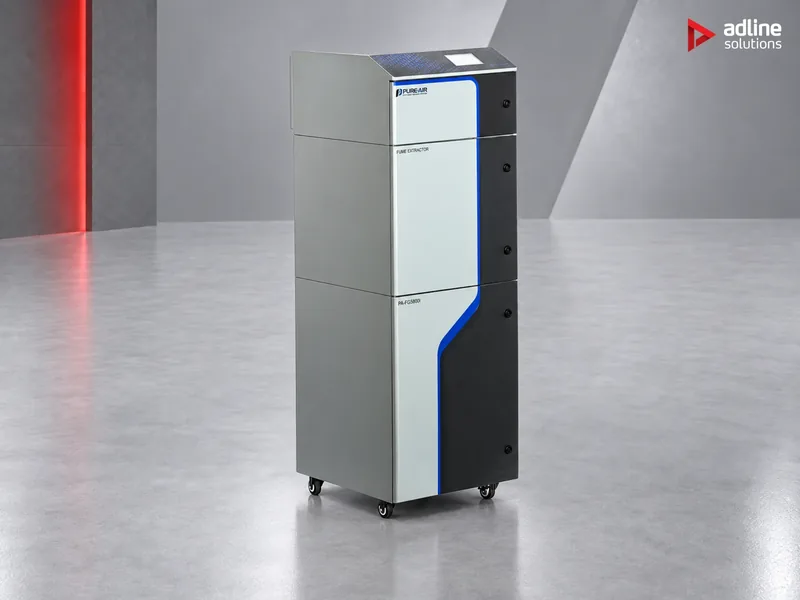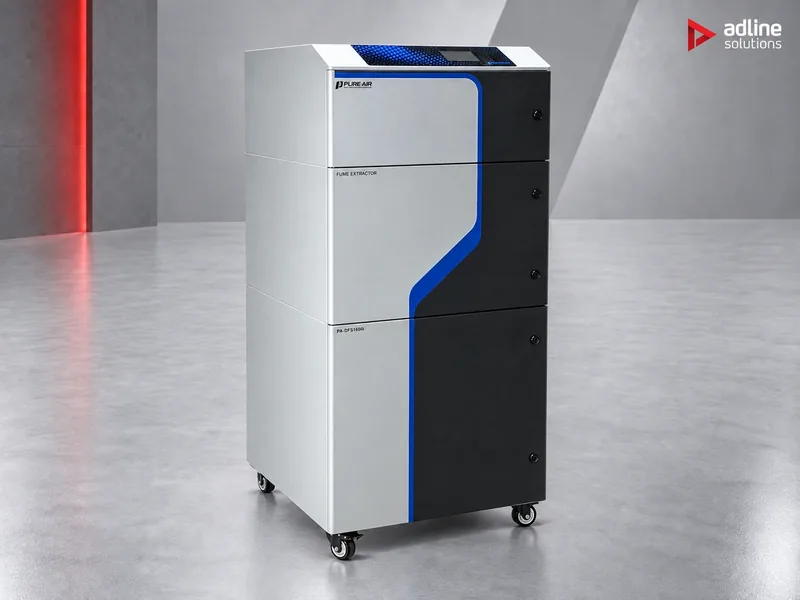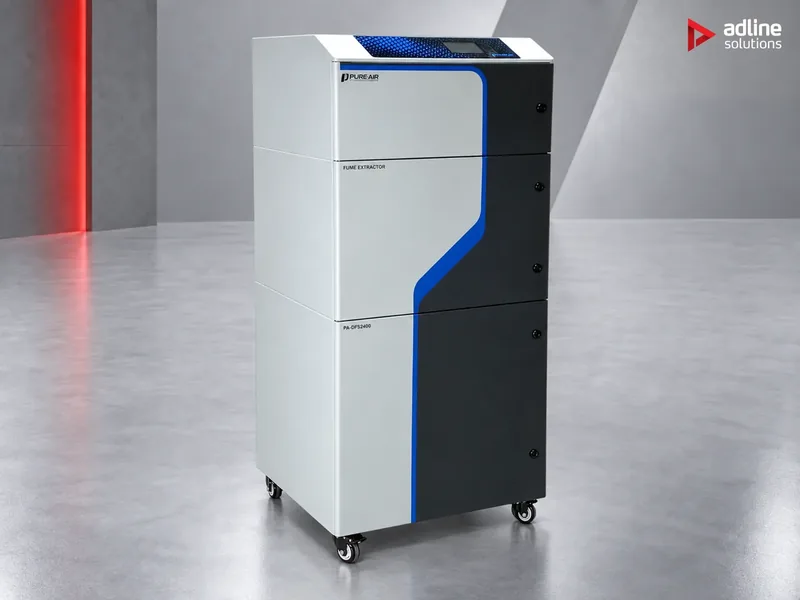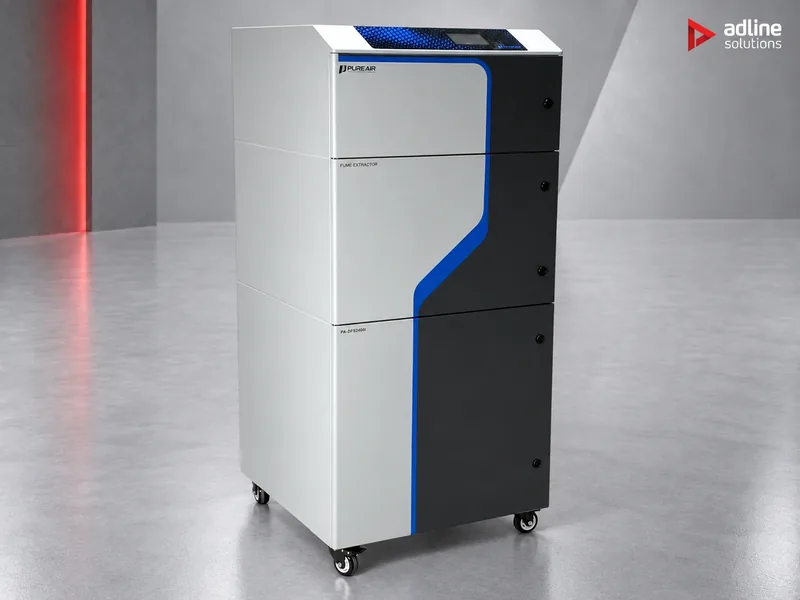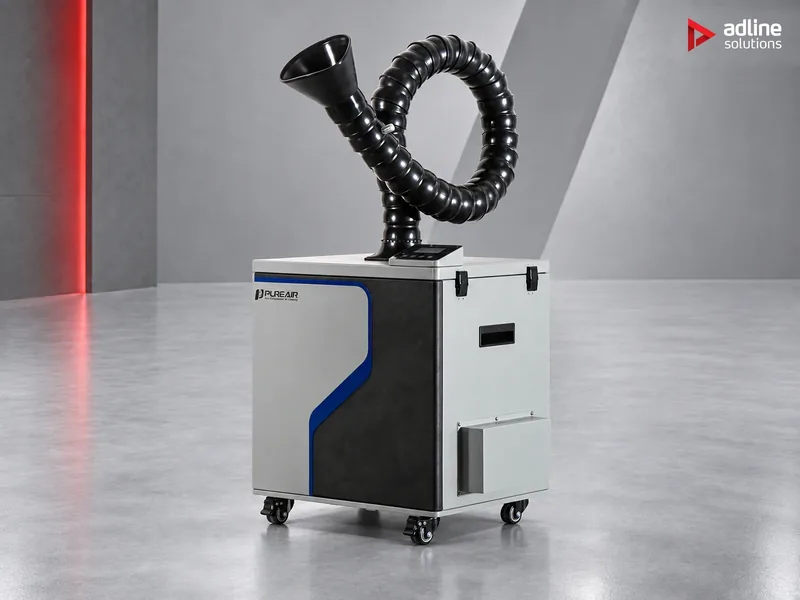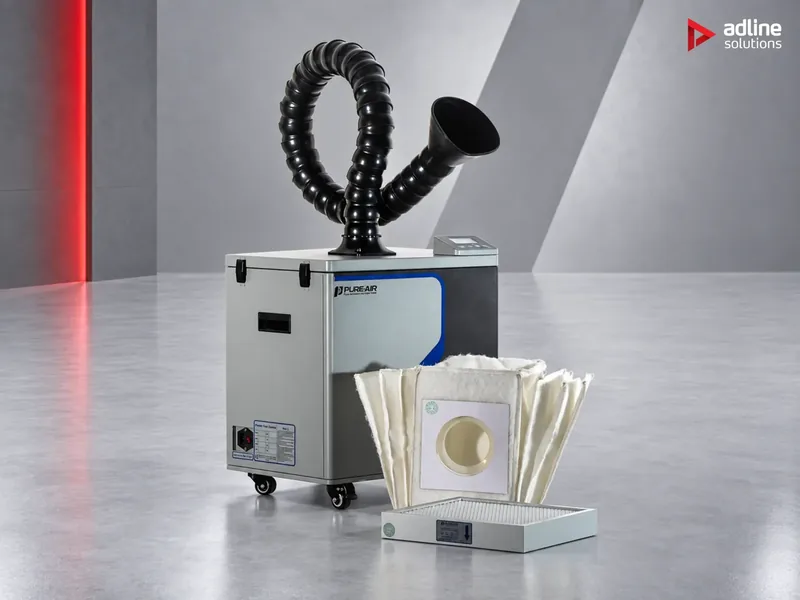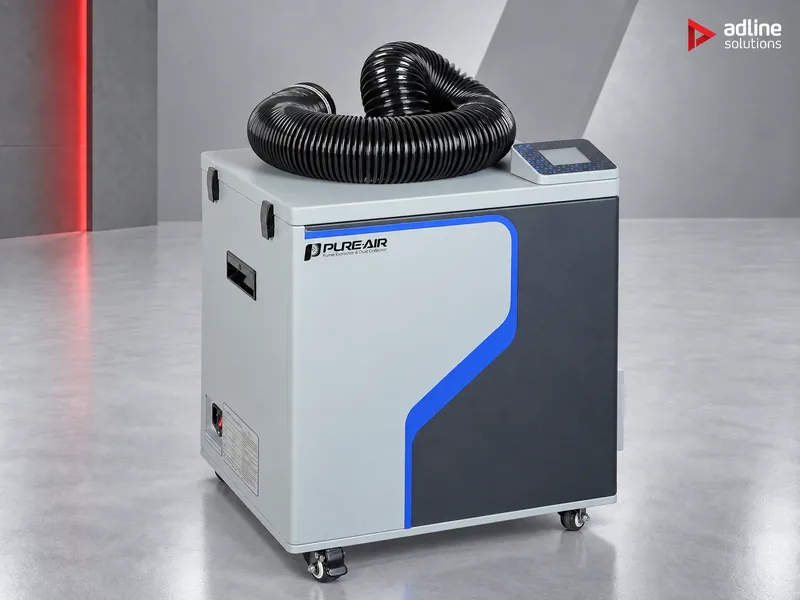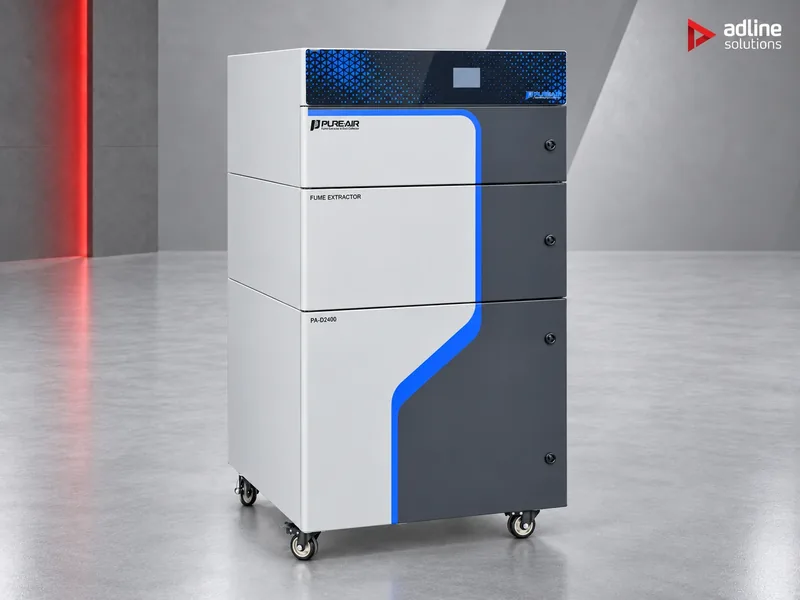
Step 1: start with the material
Each series is built around the dust and fume a process produces. Choosing by material first matters more than choosing by airflow: the wrong first filter stage clogs or wears out long before its normal life.
Filtration stages
| What you process | Series | First filter stage | Example models |
|---|---|---|---|
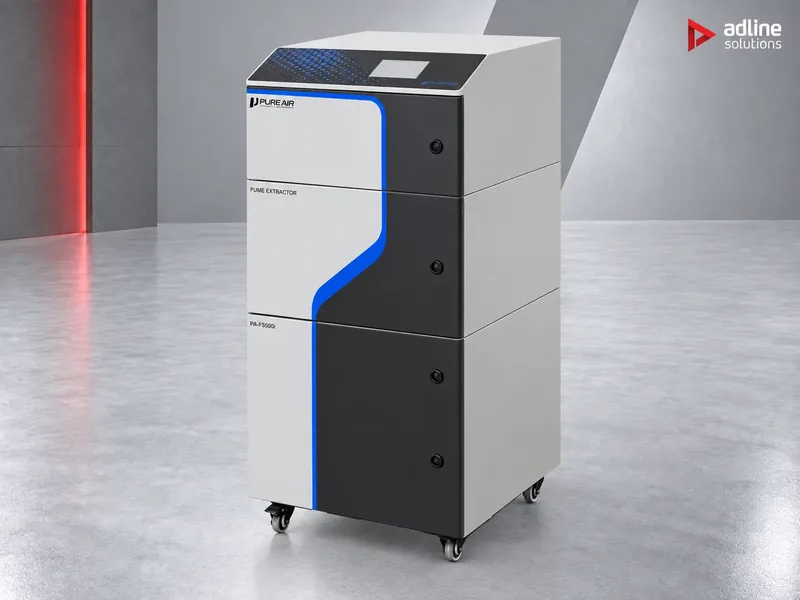
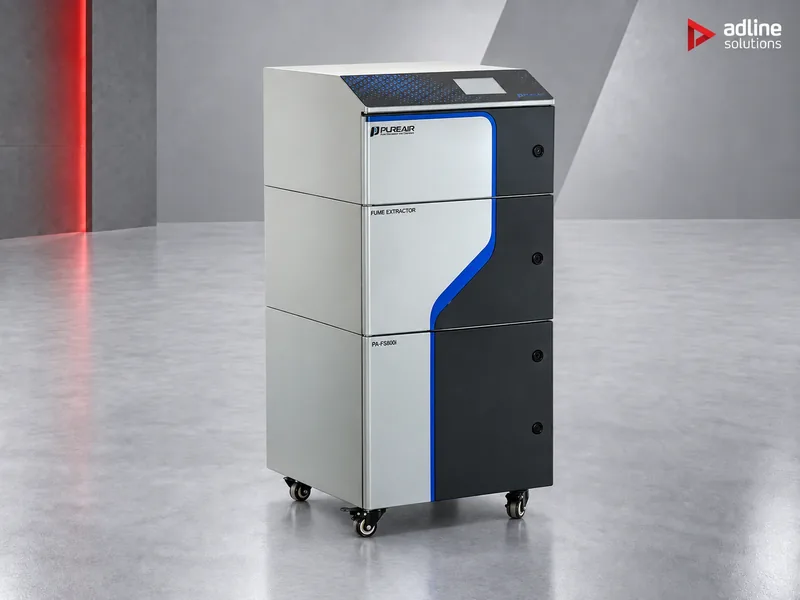
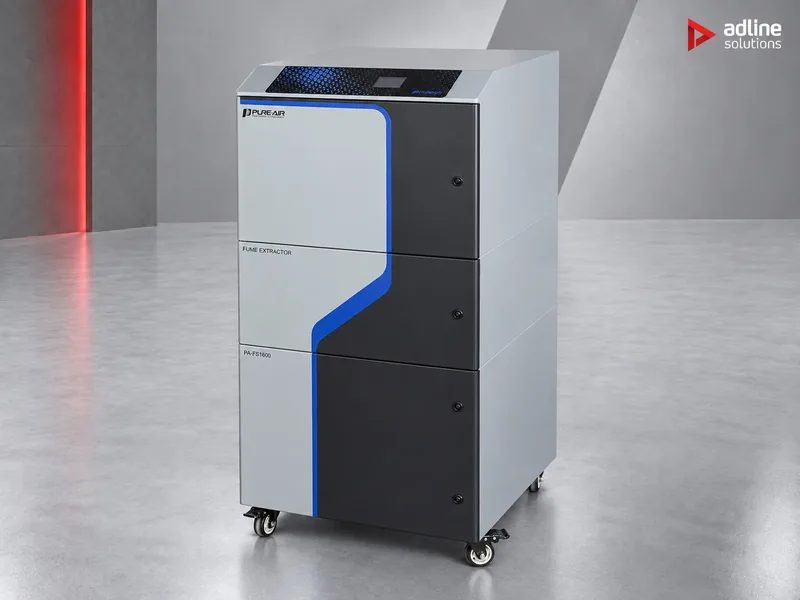
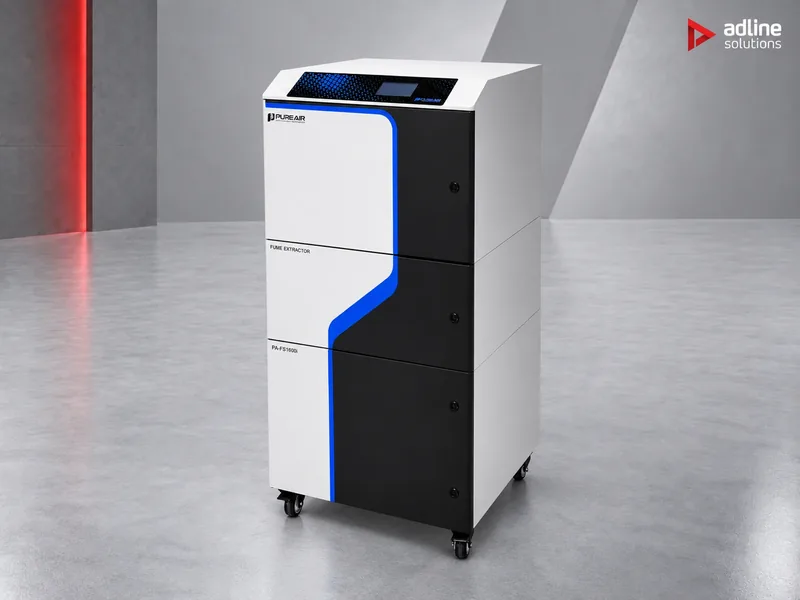
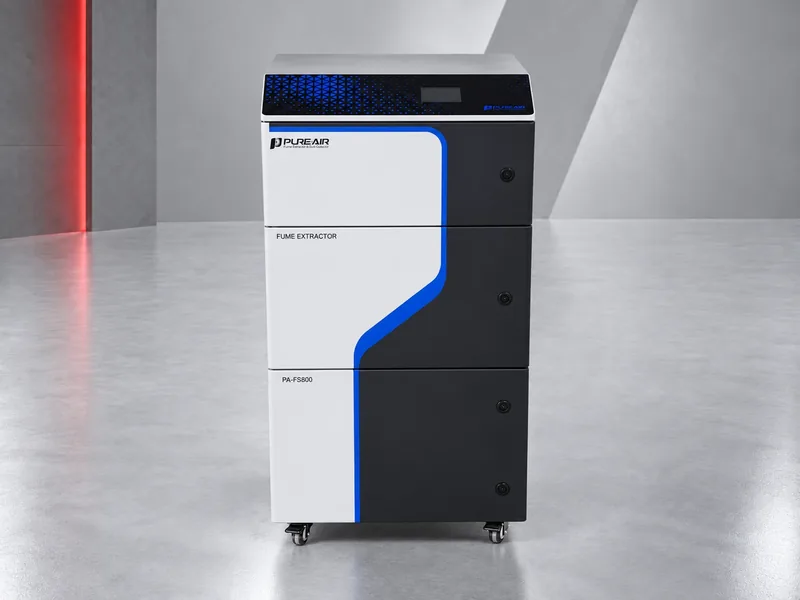
| Acrylic, plastics, paper and card, leather, textiles on a CO₂ laser; CNC routing of acrylic, composites and plastics; resin and FFF 3D printing | FS | F9 deeppleat pre-filter, then H14 and activated carbon | PA-FS300, PA-FS800, PA-FS1600 |
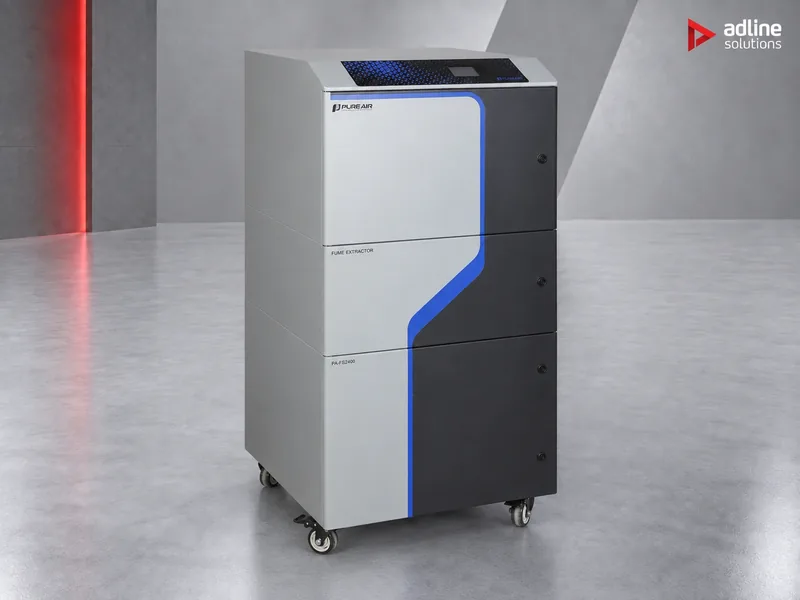
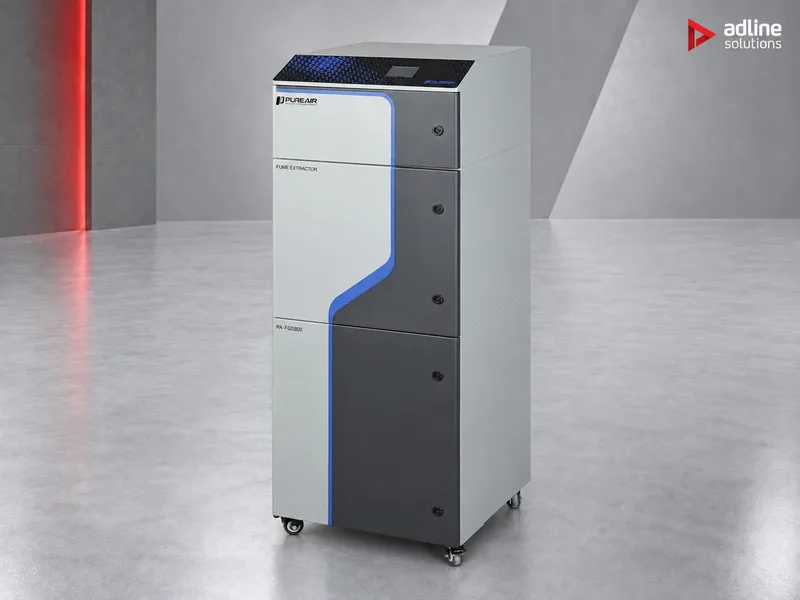
| Wood, plywood, MDF and chipboard on a CO₂ laser, CNC router or nesting machine | FGS | PTFE cartridge loaded with mineral powder, then H14 and activated carbon | PA-FGS800, PA-FGS1600, PA-FGS2400 |
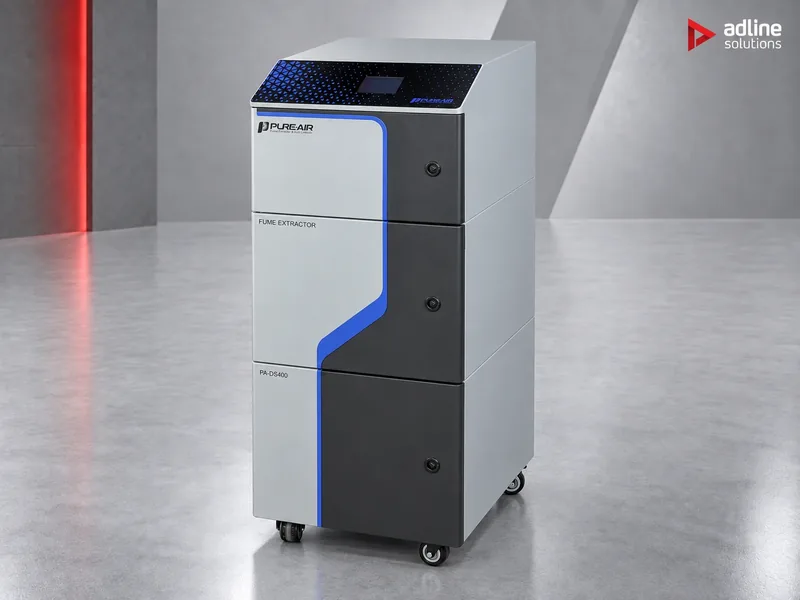
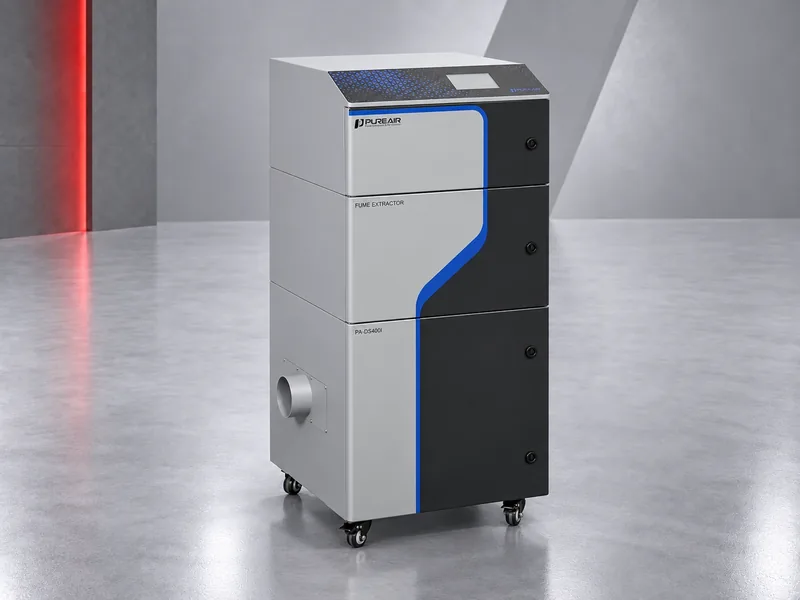
| Fibre, UV and CO₂ laser marking and coding of metals, plastics, cartons, PCB and chips | DS, F-s | DS: F9 pre-filter, H14 and activated carbon. F250s/F350s: F5 pre-filter and H14, no carbon | PA-F250s, PA-DS400, PA-DS1600 |
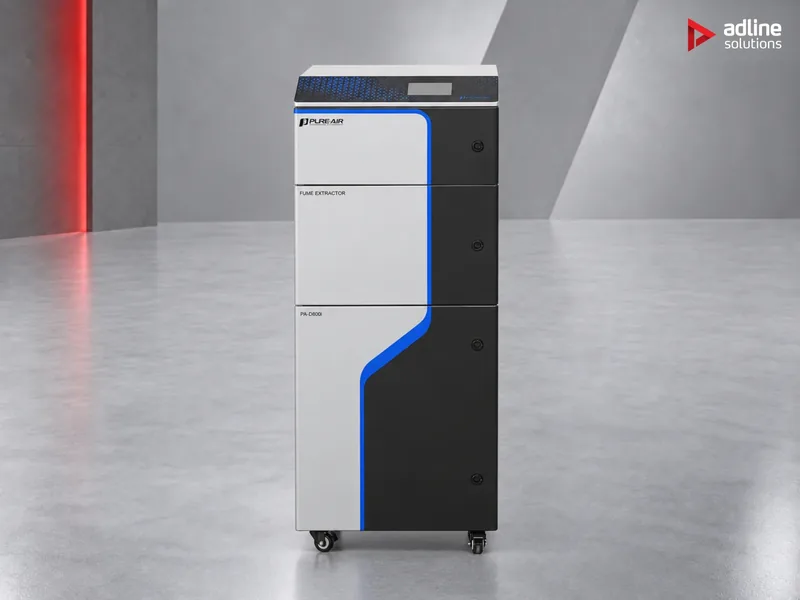
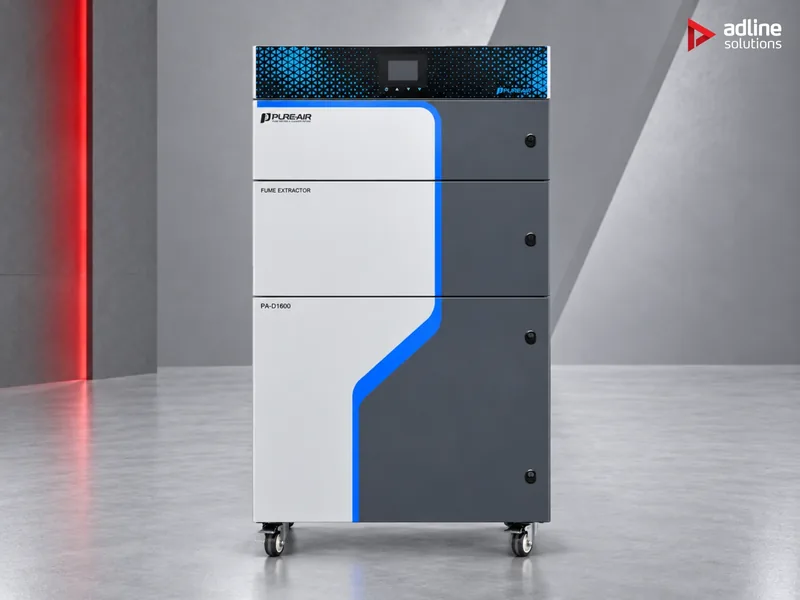
| Metal work at one station: laser scribing and drilling, laser and TIG welding, deburring, metal additive manufacturing and depowdering | D | D250–D500: F9 bag filter, no HEPA stage. D800 and up: flame retardant PTFE cartridge, then H14; carbon optional | PA-D350, PA-D800, PA-D1600 |
| Carbon fibre and composite laminates (CFRP, CMC); laser cleaning of painted or oxidised parts | DFS | Flame retardant PTFE cartridge, then H14 and activated carbon | PA-DFS800, PA-DFS1600, PA-DFS2400 |
Wood is the most common mistake. Resin and binder in the board make the smoke tacky, and it blinds the F9 pre-filter of an FS unit in a fraction of its normal life. If a laser cuts wood or MDF regularly, choose the FGS series even if it also cuts acrylic.
Step 2: size it to the machine
For CO₂ lasers, PURE-AIR recommends each model for a bed size. Match your bed to the row below; if you run several machines on one unit, or your bed sits between two rows, send us the models and we will size it.
| CO₂ laser bed | Acrylic, plastics, leather (FS) | Wood and MDF (FGS) | Airflow |
|---|---|---|---|
| 30 × 40 cm or 30 × 50 cm | PA-FS300 | — | 300 m³/h |
| 40 × 60 cm | PA-FS400 | — | 400 m³/h |
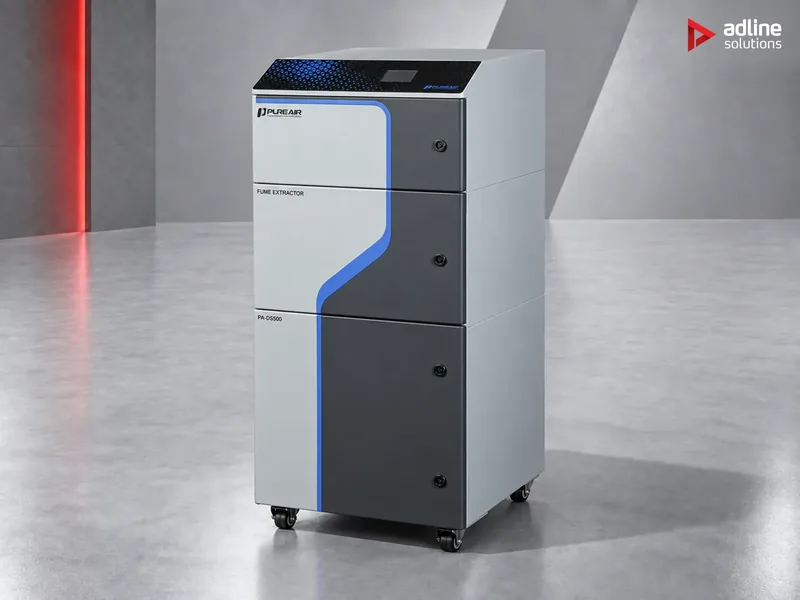
| 80 × 100 cm | PA-FS500 | PA-FGS800 | FS500: 500 m³/h · FGS800: 800 m³/h |
| 90 × 130 cm | PA-FS800 | PA-FGS1600 | FS800: 800 m³/h · FGS1600: 1600 m³/h |
| 100 × 160 cm | PA-FS1600 | PA-FGS1600 | 1600 m³/h |
| 130 × 250 cm and large format | PA-FS2400 | PA-FGS2400 | 2400 m³/h |
Marking stations and metal-working cells are sized differently: by the number of capture points, the hood or nozzle, and the duct run. The DS, D and DFS series each run from compact units to 2400 m³/h.
| Model | Airflow | Max. negative pressure | Inlet |
|---|---|---|---|
| PA-F250s | 250 m³/h | 2800 Pa | 50 / 75 mm |
| PA-F350s | 350 m³/h | 3700 Pa | 50 / 75 mm |
| PA-DS400 | 400 m³/h | 8000 Pa | 75 / 100 mm |
| PA-DS800 | 800 m³/h | 10,000 Pa | 100 / 125 mm |
| PA-DS1600 | 1600 m³/h | 10,000 Pa | 150 mm |
| PA-D250 | 250 m³/h | 2700 Pa | 75 / 100 mm |
| PA-D500 | 500 m³/h | 10,000 Pa | 75 / 100 mm |
| PA-D1600 | 1600 m³/h | 10,000 Pa | 150 mm |
| PA-DFS800 | 800 m³/h | 10,000 Pa | 100 / 125 mm |
| PA-DFS2400 | 2400 m³/h | 10,000 Pa | 200 mm |
High negative pressure is what lets a unit capture fume at the nozzle, before it spreads into the room. Keep the duct short and straight: every extra metre and every bend costs suction at the point of capture.
Step 3: standard or intelligent control
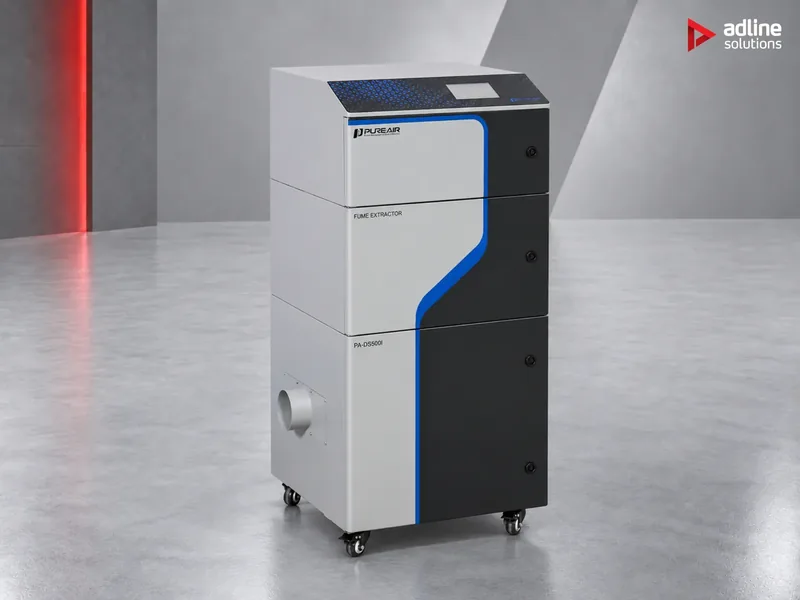
Most models come in a standard version with PPS control and an i version with PIPS intelligent control. Extraction and filtration are the same; the difference is what the unit tells you and how it connects to your machine. From 15 September 2026 PURE-AIR supplies the standard units with a colour LCD touch screen and an upgraded control system.
The i version adds:
- Real airflow and negative pressure shown on an industrial touch screen
- A filter health manager that warns before a stage blocks
- Automatic airflow compensation, so extraction does not fade as the filter loads
- I/O and RS-485 for remote start/stop, linkage with the host machine or robot and central control of several units
- Optional PM2.5, VOC and O₃ sensors
Choose the i version when the extractor has to start and stop with a machine or a production line, or when nobody stands next to it to check the filters. The compact F250s and F350s, the D250, D350 and D500, the FS300 and the FGS2400 come in the standard version only.
Examples
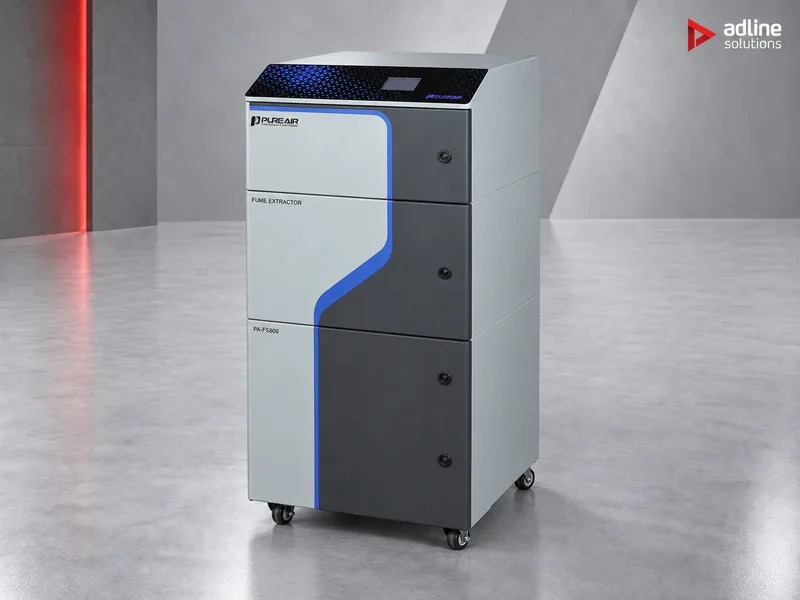
Sign shop, CO₂ laser with a 90 × 130 cm bed, cutting acrylic and engraving leather.
PA-FS800, recommended for that bed size, with F9, H14 and activated carbon for the odour of acrylic and leather.
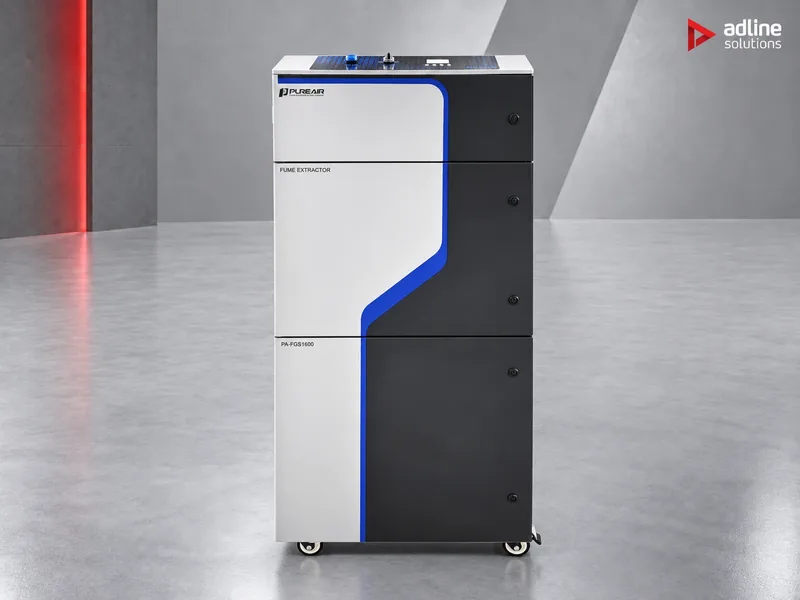
Furniture workshop, CO₂ laser with a 100 × 160 cm bed, cutting plywood and MDF.
PA-FGS1600. The PTFE mineral-powder cartridge takes the sticky wood dust that would blind an FS pre-filter.
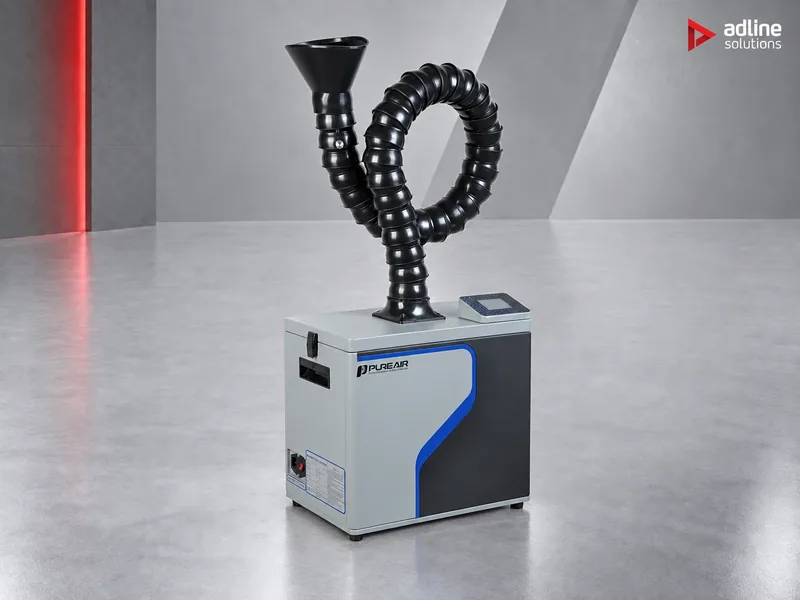
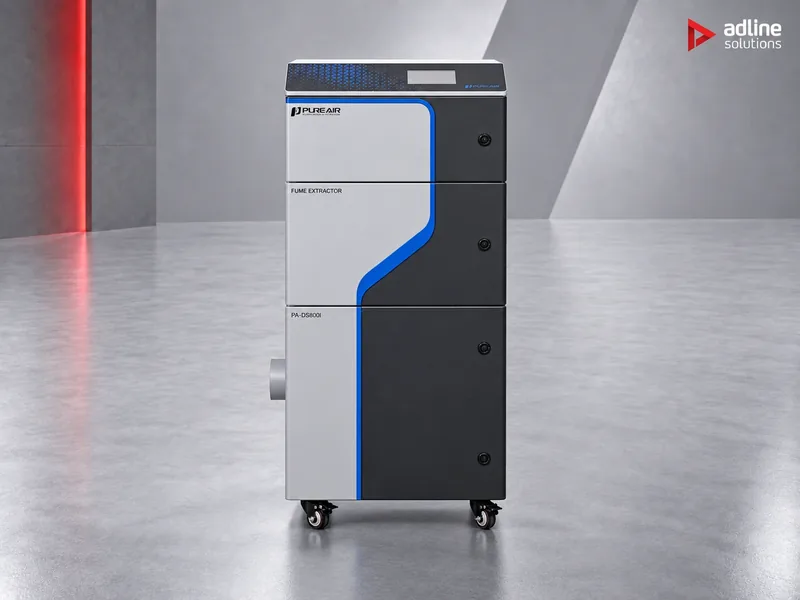
Inline marking station on an assembly line.
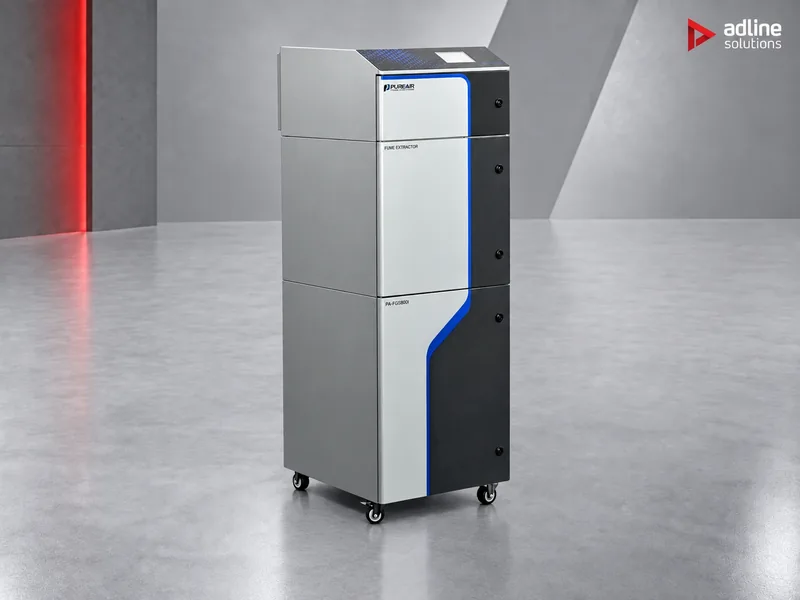
A DS unit in the i version, for example PA-DS800i, so the extractor starts and stops with the line over I/O or RS-485 and warns before its filters block.
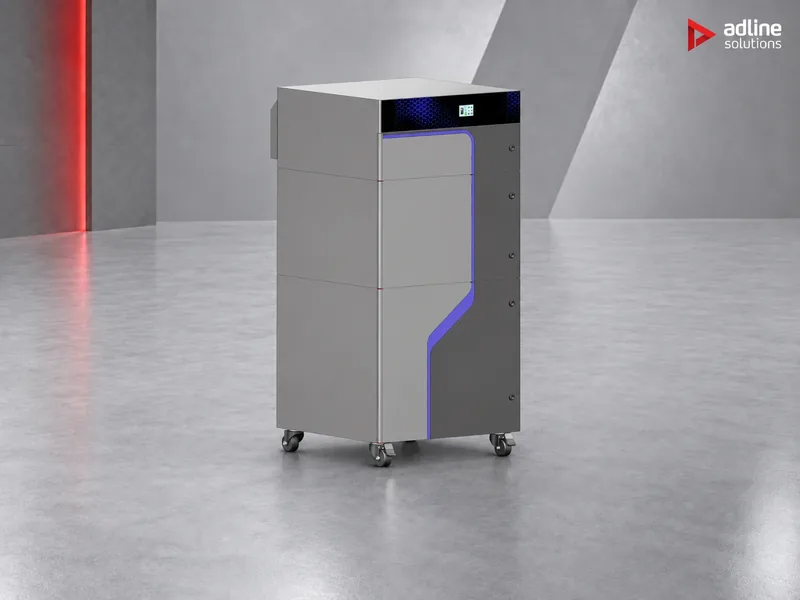
Laser cleaning of painted parts, or cutting carbon fibre panels.
The DFS series, for example PA-DFS1600: the flame retardant PTFE cartridge is built for hot, partly burning particles and abrasive, conductive dust. When cutting carbon fibre, use earthed, antistatic ducting.
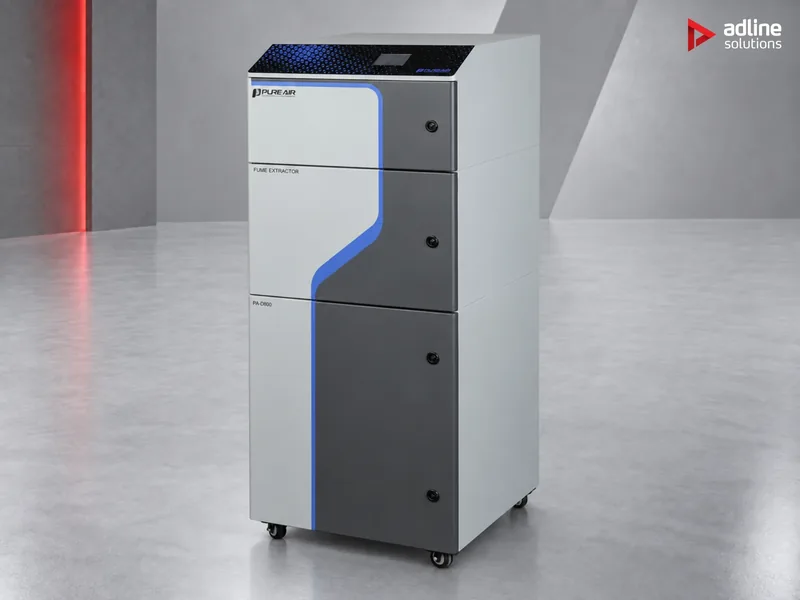
TIG welding bench or metal 3D printer depowdering station.
The D series, placed at the process and connected through a nozzle or hood. On metal powder, earth both the ducting and the unit.
Before you order
- All units in the range run on a single-phase 90–110 V or 210–257 V, 50/60 Hz supply.
- The units recirculate filtered air into the room, so no outside duct is needed for the FS, FGS, DS and DFS series.
- Leave about 150 mm clearance at the outlet and keep the front accessible: filters are changed from the front.
- None of the units is explosion-proof. If you handle metal powder or other combustible dust, send us the powder type and quantities and we will review the application.
Frequently asked questions
Can one extractor handle both wood and acrylic?
Yes, if you choose the FGS series. Its PTFE mineral-powder cartridge handles sticky wood dust, and the H14 and activated carbon stages deal with acrylic fume as well. An FS unit on wood loses its pre-filter quickly.
Do I need a duct to the outside?
Not for the FS, FGS, DS and DFS series: they filter in stages down to H14 and return the cleaned air to the room. You only need a short, straight duct from the machine to the extractor.
What is the difference between a model and its i version?
Extraction and filtration are the same. The i version adds real airflow and pressure readout, filter warnings, automatic airflow compensation and I/O and RS-485 linkage with your machine or line.
Which model fits our laser?
For CO₂ lasers, start from the bed-size table above. For marking stations and metal-working cells, send us the machine model, the number of capture points and the duct run, and we will size the unit.