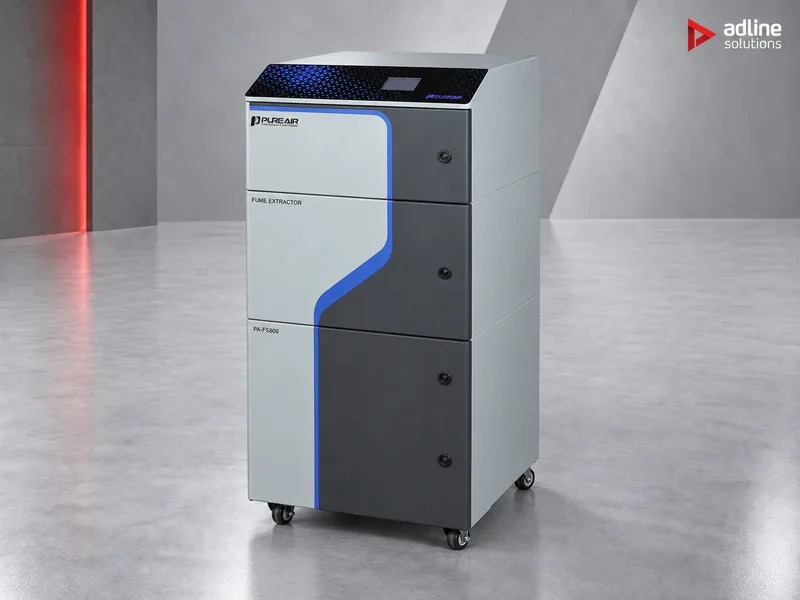
Three ways to print corrugated board
| Approach | How it prints | Best for | Our machines |
|---|---|---|---|
| Single-pass press | The heads span the sheet; the board passes under them once | Boxes in short and medium runs at production speed, from 40 to 120 m/min | Rhino 1600-A, Rhino 1600-U, Rhino 2500 |
| High-speed digital printer | Selectable modes trade speed for quality, from 300 to 1200 m²/h | Converters who want to start at lower output and add capacity later | C25 Pro+ |
| UV flatbed | The board lies on a vacuum table and the carriage prints across it | Prototypes, displays and point-of-sale, one-offs, and prints that need white ink | XTRA3220LED, UD-25R8CKV |
Single-pass press
The heads span the whole sheet and stay still; the board passes under them once, at 40 to 120 m/min on the Rhino presses.
UV flatbed
The board lies still on a vacuum table and the carriage crosses it many times; slower, but it prints one-offs, thick panels and white ink.
Digital or flexo: where digital pays
Digital printing needs no plates, so a job can start as soon as the file is ready, and the next job follows without a plate change. That changes which work is worth printing.
| Digital | Flexo and other plate processes | |
|---|---|---|
| Plates | None: the file goes straight to the press | A plate set per design and colour |
| Job change | From one file to the next, without stopping the line on the Rhino presses | Plates and ink stations changed between jobs |
| Short runs and samples | Economical from the first sheet | The plate and make-ready are spread over few sheets |
| Versions and seasonal designs | Each version is just another file | Each version needs its own plates |
| Very long runs of one design | Possible, at the press speed | Often stay on conventional lines |
| Image | Photographic images and gradients at up to 600 × 1200 dpi | Depends on plates and screening |
Many converters run both: digital for short runs, versions, samples and urgent orders, and their existing lines for the long runs.
Step 1: match output to your runs
A single-pass press is rated in metres of board per minute, so the number of sheets depends on the sheet length in the feed direction. The table shows the upper limit, before the gaps between sheets:
| Sheet length | 120 m/min | 80 m/min | 60 m/min | 40 m/min |
|---|---|---|---|---|
| 600 mm | up to 200 sheets/min | up to 133 | up to 100 | up to 67 |
| 1,000 mm | up to 120 sheets/min | up to 80 | up to 60 | up to 40 |
| 1,500 mm | up to 80 sheets/min | up to 53 | up to 40 | up to 27 |
| Machine | Ink | Output |
|---|---|---|
| Rhino 1600-A | Water-based pigment, CMYK | 120 / 80 / 60 / 40 m/min at 600 × 400 / 600 × 600 / 600 × 800 / 600 × 1200 dpi |
| Rhino 2500 | Water-based pigment, CMYK | 120 / 80 / 60 / 40 m/min at the same resolutions |
| Rhino 1600-U | Eco UV, CMYK, UV LED curing | 60 m/min at 600 × 600 dpi, 30 m/min at 600 × 1200 dpi |
| C25 Pro+ | Water-based (dye or pigment) or UV LED, CMYK | 1200 / 600 / 400 / 300 m²/h in draft / express / production / quality mode |
The C25 Pro+ is rated in square metres an hour: a 1.2 m² sheet in draft mode is up to 1,000 sheets an hour. Its heads can be extended to three rows, and the move from its economy version to the high-speed version is an online upgrade rather than a rebuild.
Step 2: know your board
The liner, the surface you print on, decides the ink and how bright the colours can be; the flute, the corrugated middle, decides the thickness and how flat the surface is.
| Liner | What to expect | Ink that suits it |
|---|---|---|
| Brown kraft, uncoated | The ink is absorbed and colours print darker on the brown base; multi-level greyscale printing gives the saturation needed on kraft | Water-based pigment (Rhino 1600-A, Rhino 2500, C25 Pro+); UV also prints on it |
| White top or white kraft | Brighter, cleaner colours for retail packaging | Water-based or UV |
| Coated or bleached liners | The surface absorbs little, so the ink must hold on top | UV (Rhino 1600-U, C25 Pro+ UV version) |
| Honeycomb panels | Rigid, light panels for displays and protective packaging | C25 Pro+; UV flatbeds for one-offs |
| Flute | Typical thickness (approx.) | Common use | In range of the presses (1.5 – 15 mm) |
|---|---|---|---|
| E | 1.5 mm | Retail and printed boxes, fine surface | Yes, at the lower limit |
| B | 3 mm | Shipping boxes, displays | Yes |
| C | 4 mm | Shipping boxes with more cushioning | Yes |
| EB, BC (double wall) | 4.5 – 7 mm | Heavy and large boxes | Yes |
| Triple wall | up to about 15 mm | Industrial packaging | Check your grade with us |
On thin liners over large flutes, the flute pattern can show through in large solid areas. Send us samples of your grades and we print them before you decide.
Step 3: water-based or UV ink
| Water-based pigment | UV (UV LED cured) | |
|---|---|---|
| How it dries | Natural drying, with no curing unit on the line | Cured by UV LED lamps as the sheet passes |
| Board surface | Absorbed into the liner, well suited to uncoated kraft | Sits on the surface, also on coated and white top liners |
| Installed power (Rhino presses) | 20 kW | 30 kW |
| Ink tanks | 10 l per colour | 5 l per colour (Rhino 1600-U) |
| Our machines | Rhino 1600-A, Rhino 2500, C25 Pro+ | Rhino 1600-U, C25 Pro+ (UV version), UV flatbeds |
On every Rhino press, the ink is recirculated behind the nozzles at high flow and held at a steady temperature, so the drop size does not drift over a long shift; nozzle cleaning and moistening are automatic. For packaging that comes into contact with food, ask for the ink compliance documents for your application before you choose.
Print quality: resolution, colour and versions
- Resolution: all the presses reach 600 × 1200 dpi. On the Rhino presses, lower resolutions raise the speed: 600 × 400 dpi at 120 m/min for solids and text, 600 × 1200 dpi at 40 m/min (water-based) for images.
- Greyscale: the heads place drops of several sizes, which gives smoother gradients and the saturation needed on brown kraft.
- Colour: all the presses print CMYK. Brand colours are matched in the RIP: Photoprint is supplied, and the systems are open to third-party RIP software.
- White: none of the presses prints white. For white on brown board, use a UV flatbed with a white channel, such as the XTRA3220LED (optional white and varnish) or the UD-25R8CKV.
- Versions and personalisation: without plates, every version is just another file, so seasonal designs, regional versions and small personalised runs follow each other on the line.
Step 4: sheet size and handling
- Thickness: the Rhino presses and the C25 Pro+ take board 1.5 – 15 mm thick, including honeycomb panels on the C25 Pro+.
- Feed width: 500 – 1600 mm on the Rhino 1600 models, 500 – 2500 mm on the Rhino 2500 and the C25 Pro+. On the Rhino 1600 models, the print width is 645 – 1290 mm as standard, 1610 mm as an option.
- Sheet length: 400 – 1500 mm, or up to 4000 mm with the optional support.
- Feeding: the presses feed from the leading edge, keeping manual handling to a minimum; the Rhino 1600 models have a pressure-free leading-edge feeder, optional on the Rhino 2500. The C25 Pro+ holds the board on a vacuum table on an industrial conveyor belt.
- UV flatbeds: the XTRA3220LED prints boards up to 3200 × 2000 mm and 100 mm thick; the UD-25R8CKV has a 2440 × 1220 mm print area.
From printed sheet to finished box
1Feed
A leading-edge feeder takes sheets one by one, with minimal handling.
2Dedust
Fibre lint is removed before it reaches the nozzles.
3Print
Fixed heads print CMYK across the sheet in a single pass.
4Dry or cure
Water-based ink dries naturally; UV ink is cured by UV LED lamps.
5Cut and crease
On a die-cutting line for runs, or a digital cutting table for samples and short runs.
- Runs go on to your die-cutting and folder-gluer lines as before: the printed sheet is handled like any pre-printed sheet.
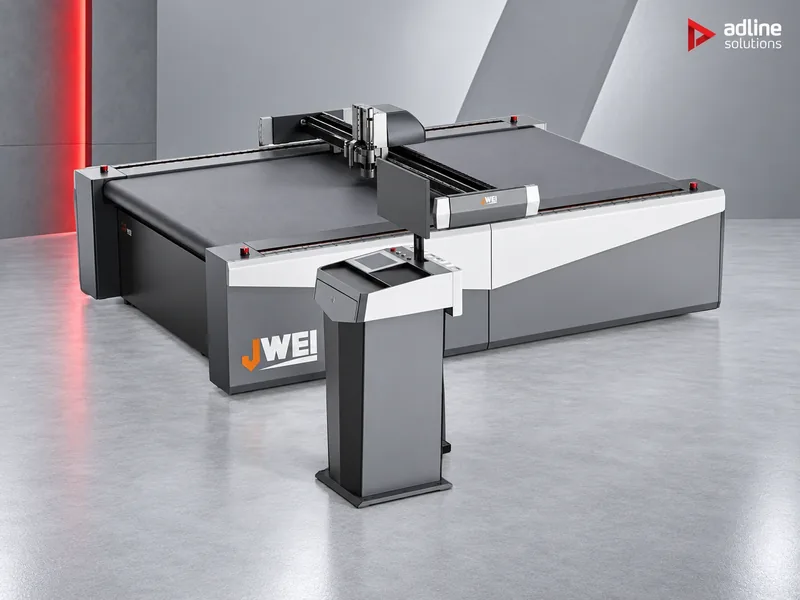
- Samples, short runs and displays are cut and creased on a digital cutting table, without a die. The Jwei SG cuts, creases, draws and routes corrugated, greyboard and honeycomb board in one pass, on beds from 1600 × 1200 to 3200 × 3200 mm.
- Unattended cutting: the Jwei SC1625 is available with a loading and unloading line that takes sheets from 600 × 900 to 1600 × 2500 mm, up to 22 mm thick, from a pallet and restacks them.
- Camera positioning on the Jwei tables registers the printed sheet before cutting, and QR codes on the sheet call up the right job.
Our corrugated printers compared
| Rhino 1600-A | Rhino 1600-U | Rhino 2500 | C25 Pro+ | |
|---|---|---|---|---|
| Type | Single-pass press | Single-pass press | Single-pass press | High-speed digital printer |
| Ink | Water-based pigment, CMYK | Eco UV, CMYK | Water-based pigment, CMYK | Water-based (dye or pigment) or UV LED, CMYK |
| Drying | Natural | UV LED lamps | Natural | Natural or UV LED, by version |
| Speed | 120 / 80 / 60 / 40 m/min | 60 / 30 m/min | 120 / 80 / 60 / 40 m/min | 1200 / 600 / 400 / 300 m²/h |
| Maximum resolution | 600 × 1200 dpi | 600 × 1200 dpi | 600 × 1200 dpi | 600 × 1200 dpi |
| Feed width | 500 – 1600 mm | 500 – 1600 mm | 500 – 2500 mm | 500 – 2500 mm |
| Sheet length | 400 – 1500 mm (4000 optional) | 400 – 1500 mm (4000 optional) | 400 – 1500 mm (4000 optional) | 400 – 1500 mm (4000 optional) |
| Board thickness | 1.5 – 15 mm | 1.5 – 15 mm | 1.5 – 15 mm | 1.5 – 15 mm, also honeycomb |
| Ink system | Recirculation, thermostatting, automatic nozzle care | Recirculation, thermostatting, automatic nozzle care | Recirculation, thermostatting, automatic nozzle care | Thermostatting, automatic nozzle care |
| Data and RIP | Optical fibre; Photoprint | Optical fibre; Photoprint | Optical fibre; Photoprint | USB 3.0; Photoprint |
| Power | 380 – 400 V, 40 A, 20 kW | 380 – 400 V, 60 A, 30 kW | 380 – 400 V, 40 A, 20 kW | 380 – 400 V, 40 A, 15 kW |
| Machine / weight | 5350 × 4320 × 1950 mm, 7500 kg | 5350 × 4320 × 1950 mm, 7500 kg | 6100 × 5910 × 2000 mm, 6000 kg | 5300 × 3950 × 1820 mm, 5500 kg |
| Installation area | 7350 × 9320 × 3000 mm | 7350 × 9320 × 3000 mm | 8100 × 8910 × 3000 mm | 8300 × 8910 × 3000 mm |
Step 5: plan the site
- Power: three-phase 380 – 400 V; 40 A on the water-based presses and the C25 Pro+, 60 A on the Rhino 1600-U.
- Compressed air: 6 – 8 bar, dry, on all four machines.
- Climate: 24 – 28 °C and 50 – 70% relative humidity in the print room.
- Space: plan the installation area in the comparison above, not just the machine size: it includes room to load, operate and service.
- Delivery: the Rhino presses ship in two parts, the printing unit and the feeder; on the Rhino 1600 models they weigh 6000 kg and 3000 kg. Check access, floor load and lifting before delivery.
Keeping the press running
- Lint: corrugated board sheds fibre, and lint on the nozzle plate is the usual cause of blocked nozzles. The Rhino presses dedust the board automatically before printing; keep the feed area clean as well.
- Board condition: warped or damp board feeds badly and can touch the heads. Store the board in the print room so it reaches the room's temperature and humidity.
- Ink system: recirculation behind the nozzles and automatic cleaning and moistening keep the heads ready between sheets and jobs; follow the daily routine shown at training.
- Climate: keep the room in the specified range all year: humidity that is too low or too high affects both the board and the ink.
Common mistakes
- Choosing on top speed alone. The speed that counts is the one at the resolution your jobs need.
- Expecting white from a CMYK press. For white on brown board, plan a UV flatbed alongside the press.
- Water-based ink on coated liners. The ink needs an absorbent surface; on coated liners choose UV.
- Planning the machine footprint, not the installation area. The installation area is the space to plan.
- Skipping trials. Print your own grades and artwork before you decide; liners vary between mills.
Examples
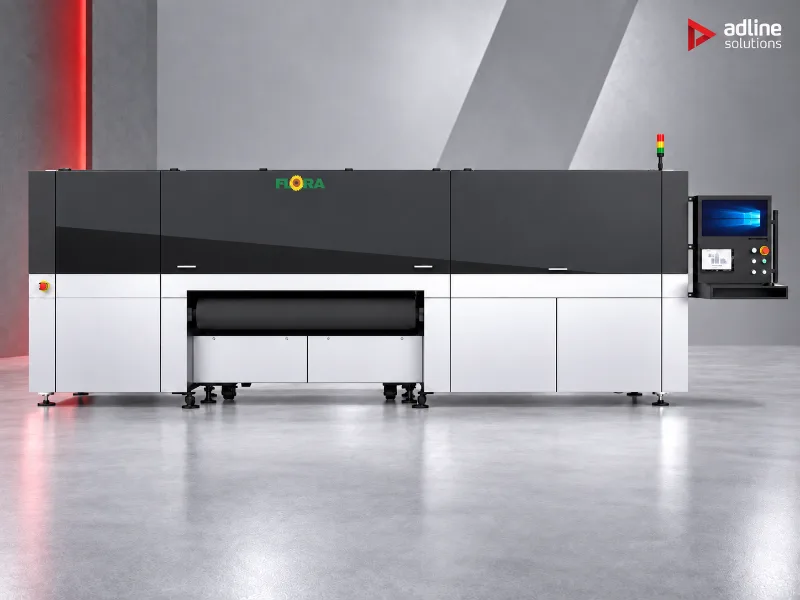
Box maker replacing plate changes on short runs of brown boxes.
Rhino 1600-A: water-based pigment on uncoated kraft at up to 120 m/min.
Converter printing on white and coated top liners.
Rhino 1600-U: UV ink cured on the line, up to 60 m/min.
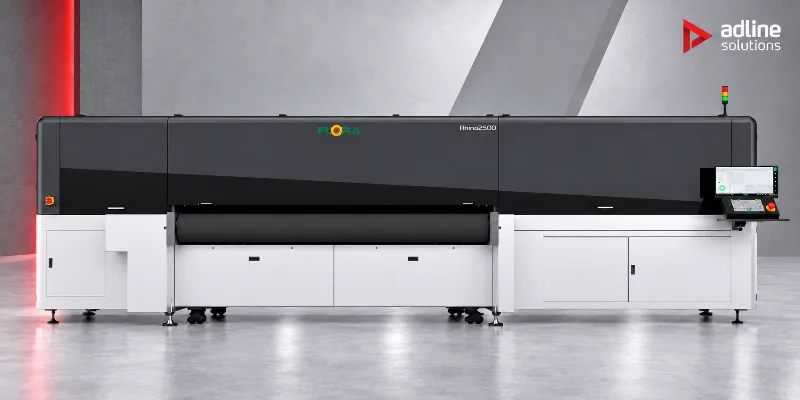
Wide sheets for large boxes and displays.
Rhino 2500 or C25 Pro+, with feed widths up to 2500 mm.
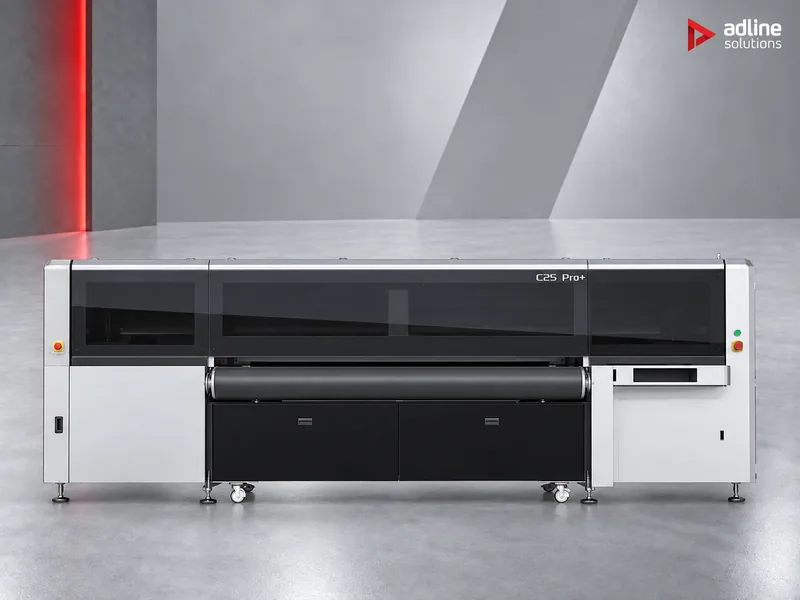
Converter starting digital at lower volume.
C25 Pro+ in its economy version, upgraded online as volume grows.
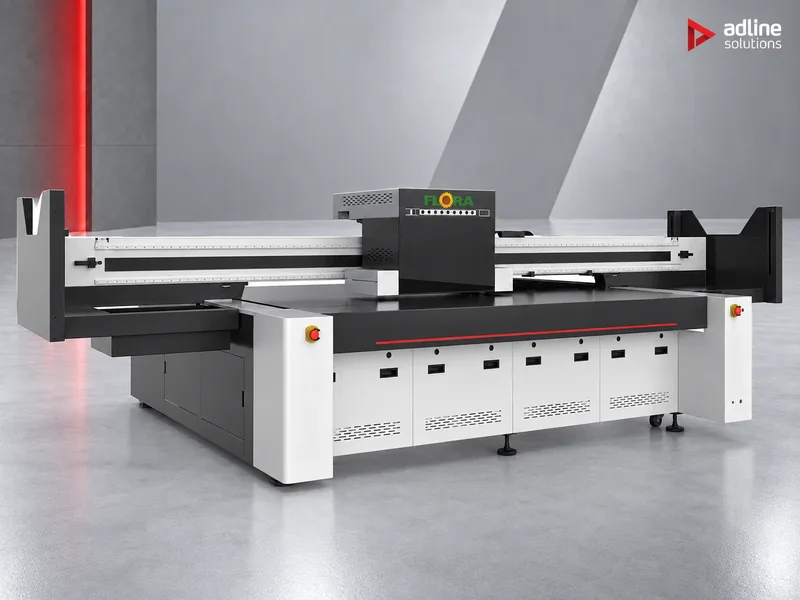
Display and point-of-sale studio, prototypes and one-offs.
XTRA3220LED UV flatbed for the print, with the Jwei SG for cutting and creasing. See our UV printer guide for the flatbed range.
Glossary
- Single-pass: printing with fixed heads that span the sheet, so each sheet is printed in one pass.
- Liner: the flat paper on the outside of the board, the surface you print on.
- Flute: the wavy middle layer; its size (E, B, C) sets the board thickness.
- Kraft, white top: brown unbleached liner, and a liner with a white top layer for brighter print.
- Greyscale printing: heads that place drops of several sizes, for smoother tones.
- Dedusting: removing fibre lint from the board before it reaches the heads.
- Leading-edge feed: feeding each sheet from its front edge, one at a time.
- RIP: the software that prepares files, manages colour and drives the press.
Before you order
- Send us your board grades, sheet sizes, run lengths and monthly volume, and whether the print goes on brown kraft or white liners.
- Send samples of your board: we print them before you decide.
- Check the site: three-phase power, dry compressed air, room temperature and humidity, the installation area and delivery access.
- Installation, operator training and technical service are available and quoted per machine and country.
Frequently asked questions
What is the difference between single-pass and a UV flatbed for corrugated board?
A single-pass press prints the whole sheet as it passes under fixed heads, at 40 to 120 m/min, and suits boxes in runs. A UV flatbed holds the board on a table while the carriage prints across it, and suits prototypes, displays and one-offs.
How many sheets a minute does a single-pass press print?
Divide the speed by the sheet length in the feed direction. At 120 m/min, 1,000 mm sheets pass at up to 120 a minute, before the gaps between sheets; at 600 × 1200 dpi the water-based Rhino presses run at 40 m/min.
Can I print white on brown kraft?
The Rhino presses and the C25 Pro+ print CMYK. For white ink on brown board, use a UV flatbed with a white channel, such as the XTRA3220LED or the UD-25R8CKV.
Water-based or UV ink for corrugated?
Water-based pigment is absorbed into uncoated kraft and dries naturally, with no curing unit. UV ink is cured on the surface by UV LED lamps and also holds on white top and coated liners.
What board thickness can the presses print?
The Rhino presses and the C25 Pro+ take corrugated board 1.5 – 15 mm thick. The UV flatbeds print boards up to 100 mm thick.
Does water-based ink need a dryer?
Not on the Rhino 1600-A and Rhino 2500: the water-based pigment ink dries naturally, with no curing unit on the line. The Rhino 1600-U uses UV ink cured by UV LED lamps.
Can digital printing replace flexo for short runs?
For short and medium runs, versions and personalised boxes, yes: digital printing needs no plates, so changing jobs costs little. Very long runs of one design often stay on conventional lines.
Can I print versions or personalised boxes?
Yes. Without plates, each version is another file, so seasonal designs, regional versions and small personalised runs follow each other without stopping the line.