
Laser marking & coding
Sub-micron fume from fibre and CO₂ marking
Applications
- Electronics
- Laser coding
- Laser marking
- Metal
- Plastics
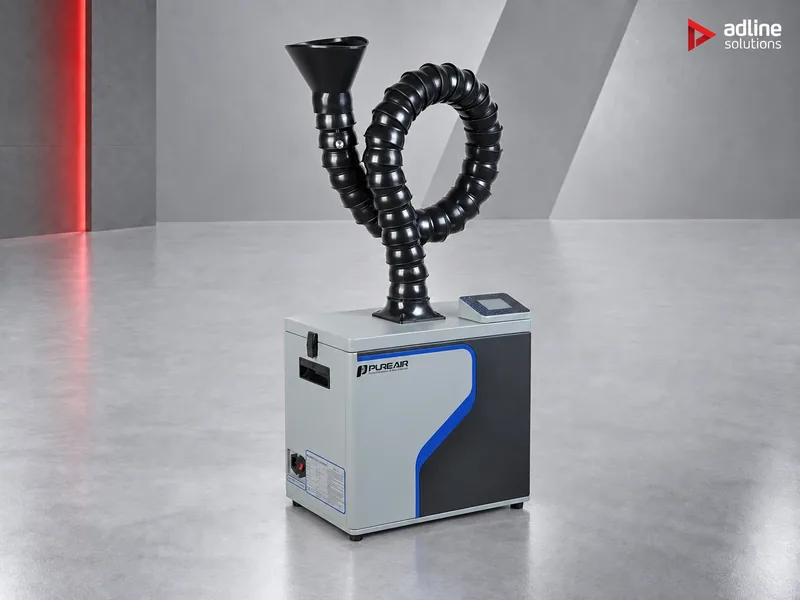
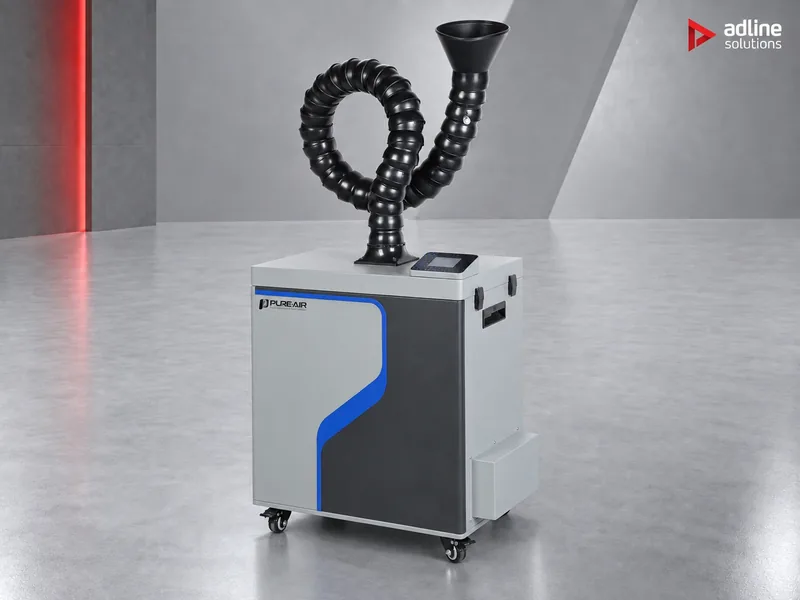
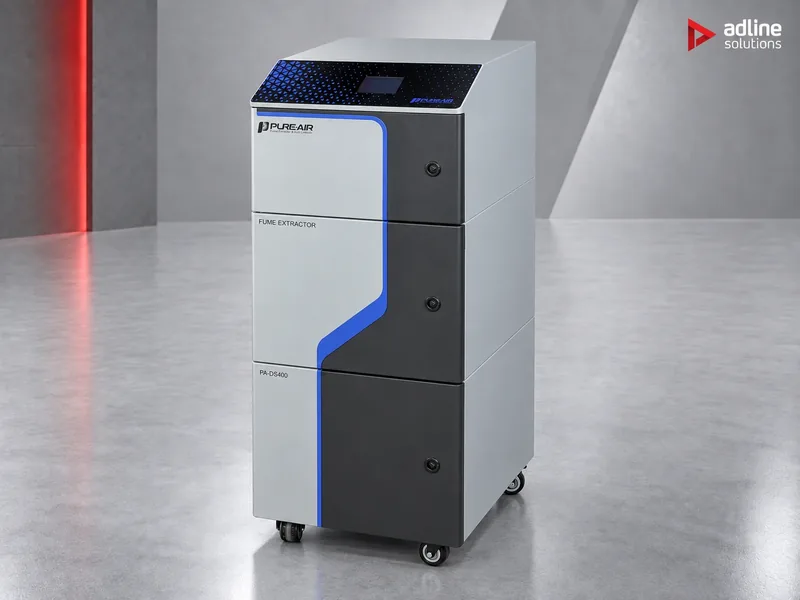
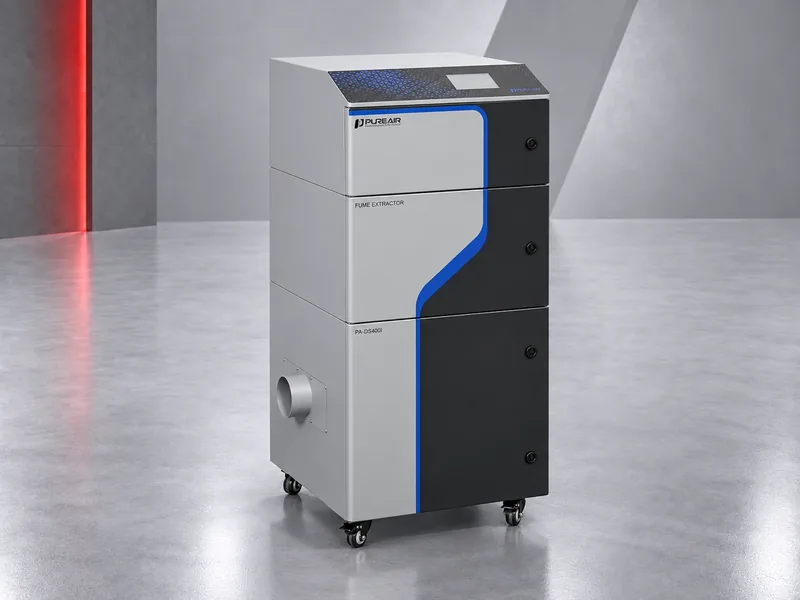
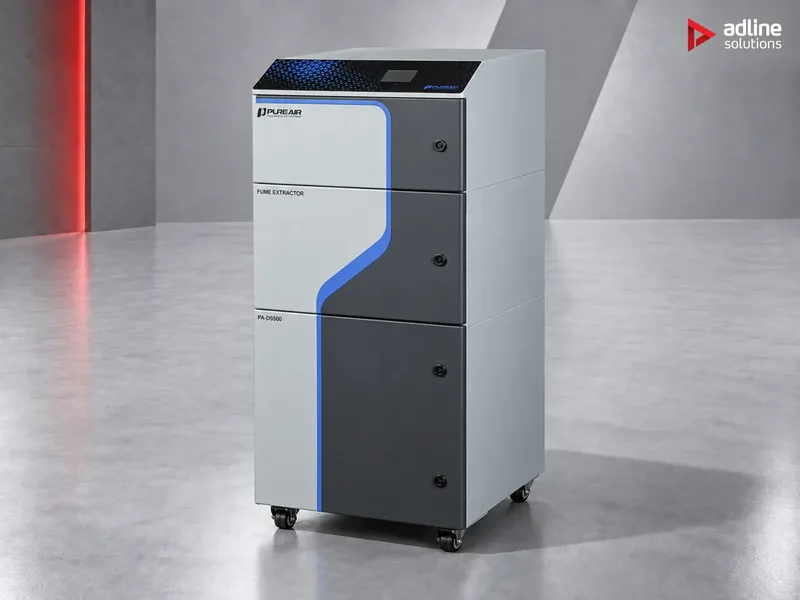
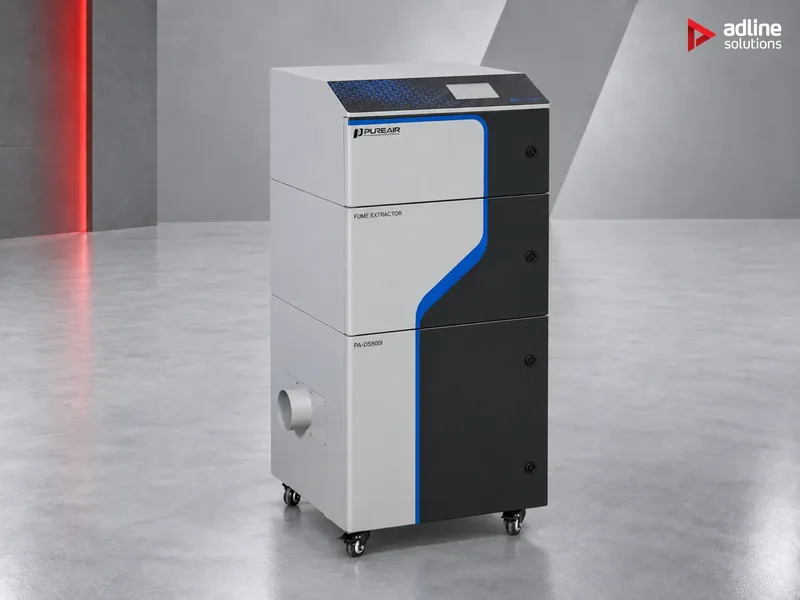
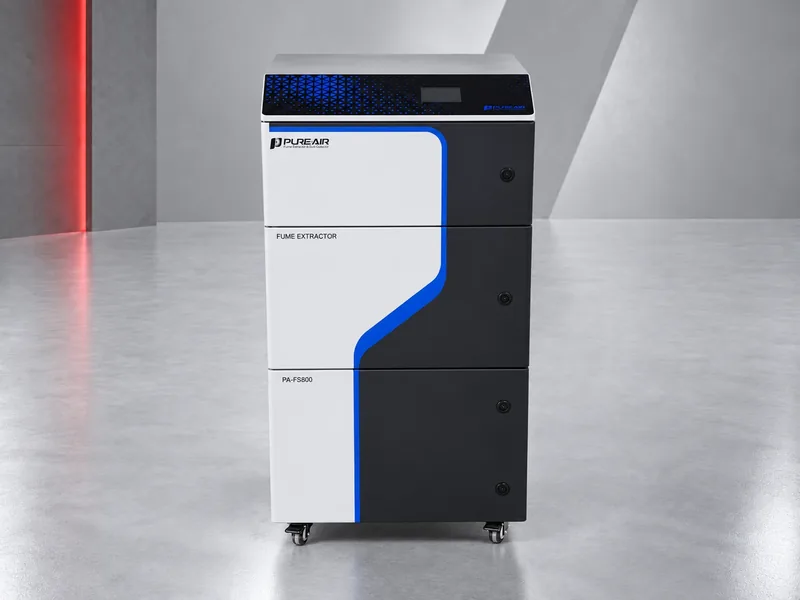
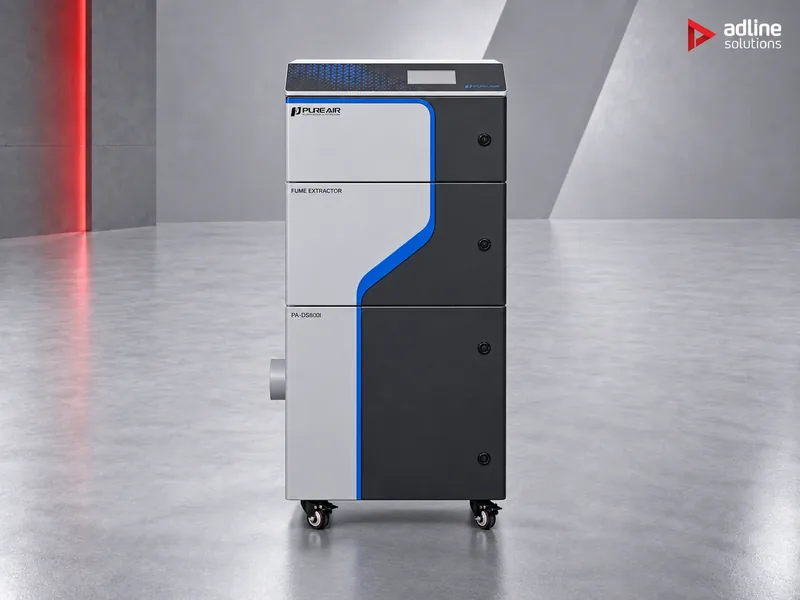
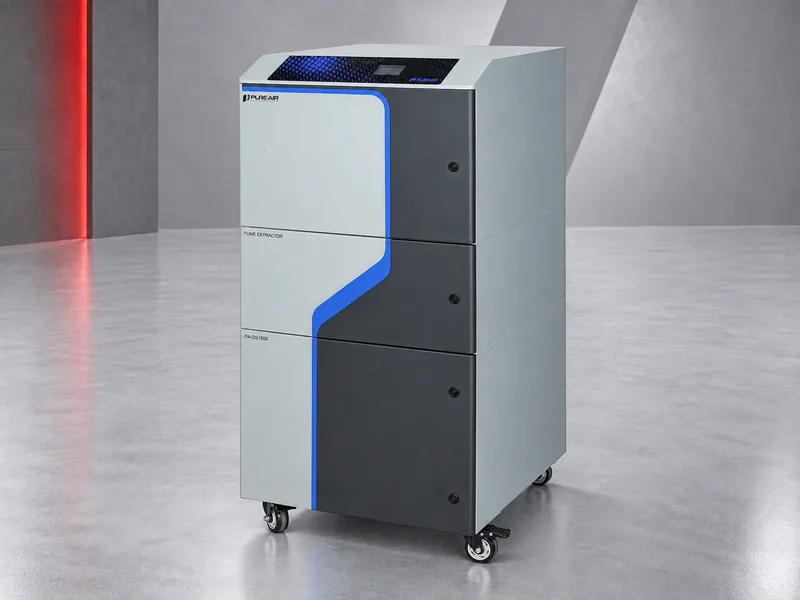
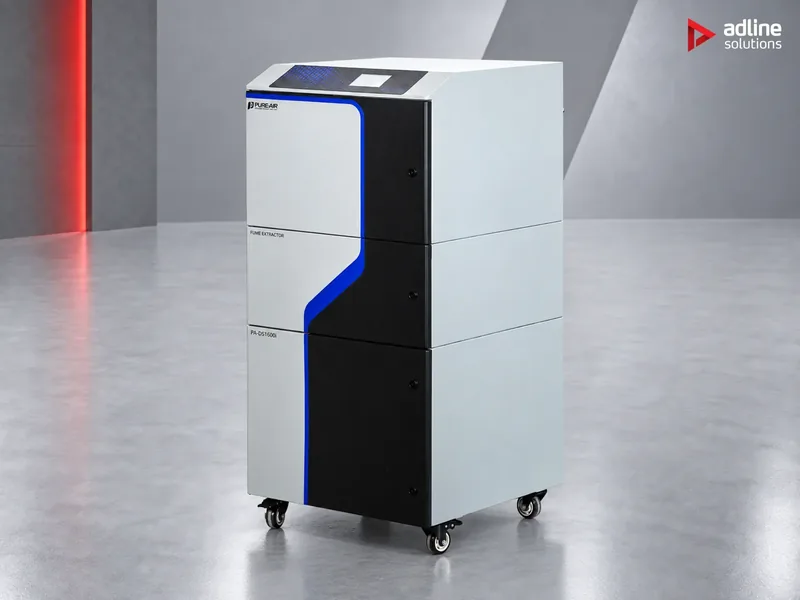
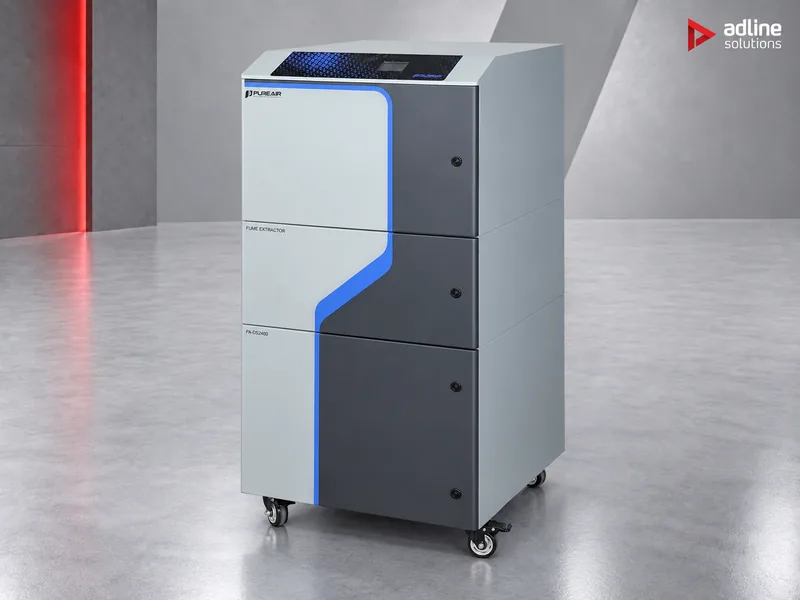
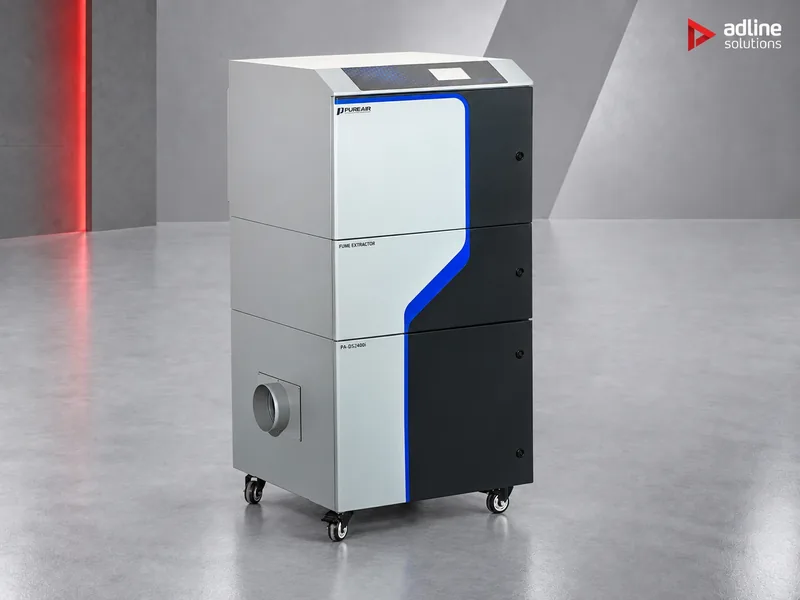
About this range
Fibre and CO₂ laser marking produces metal oxide fume and plastic vapour that is almost entirely sub-micron — invisible, and it does not settle. The F series covers a single bench-top marking station; the DS series covers marking cells and inline stations, adding an activated carbon bed for odour.
- Your machinelaser · CNC · printer extraction port, connected by a duct
- One cabinet · air never leaves the building
- Stage 1 · F5 / F9 pre-filterholds coarse particles
- Stage 2 · HEPA H14holds the fume you cannot see · 99.99% @ 0.3 µm
- Stage 3 · Activated carbonholds VOC and odour
- Fan after the filters: it pulls through every stage, so suction at the nozzle stays the number that matters.
- Clean airback into the room, no outside duct
- Clean air out · brushless fanpulls through every stage
- Stage 2 · HEPA H1499.99% @ 0.3 µm
- Stage 1 · F5 / F9 pre-filterholds coarse particles
- Contaminated air inducted from the machine; dust drawer emptied from the front
Same range, opposite problems — which is why one unit does not stand in for the other.
PPS — standard control
models without the “i” suffix
- Start / stop, speed steps
- Filter replacement warning
- Colour LCD screen (from 15.09.2026)
PIPS — intelligent control
the “i” models · everything on the left, plus:
1 240 m³/h
−8 600 Pa at the inlet
filter life 65%
- Airflow held steady as the filter loads
- Air-quality sensors with alarm thresholds
- I/O and RS-485 — starts with the machine
Both are current models. PIPS earns its place where the unit runs unattended, feeds a line, or has to prove it is working.
| What you process | Series | Why that one |
|---|---|---|
| Acrylic, paper, leather, textiles, resin 3D | Series: FS | F9 pleated pre-filter |
| Wood, plywood, MDF | Series: FGS | PTFE cartridge — sticky dust releases |
| Carbon fibre, composites, laser cleaning | Series: DFS | Flame retardant cartridge, antistatic duct |
| Laser marking and coding | Series: F · DS | Sub-micron fume, carbon for odour |
| Metal — one station (weld, drill, AM) | Series: D compact | Up to 10 000 Pa at the nozzle |
| Metal — a full cutting bed | Series: D industrial | Volume plus self-cleaning cartridges |
Then size it: the machine bed decides the airflow — 30×40 cm needs 300 m³/h, 130×250 cm needs 2400 m³/h.
Frequently asked questions
Where does the filtered air go?
Back into the room. The mobile units are recirculating, so there is no duct to the outside and no heated air thrown away in winter. The central industrial units are ducted to the machine enclosure and need a compressed-air line for their self-cleaning cartridges.
What maintenance does it need day to day?
Check the element is seated and sealed before running. When the blockage alarm shows, replace it then — running on past it pushes fume into the fan and the control board, which turns a filter change into a repair.