
Sublimation
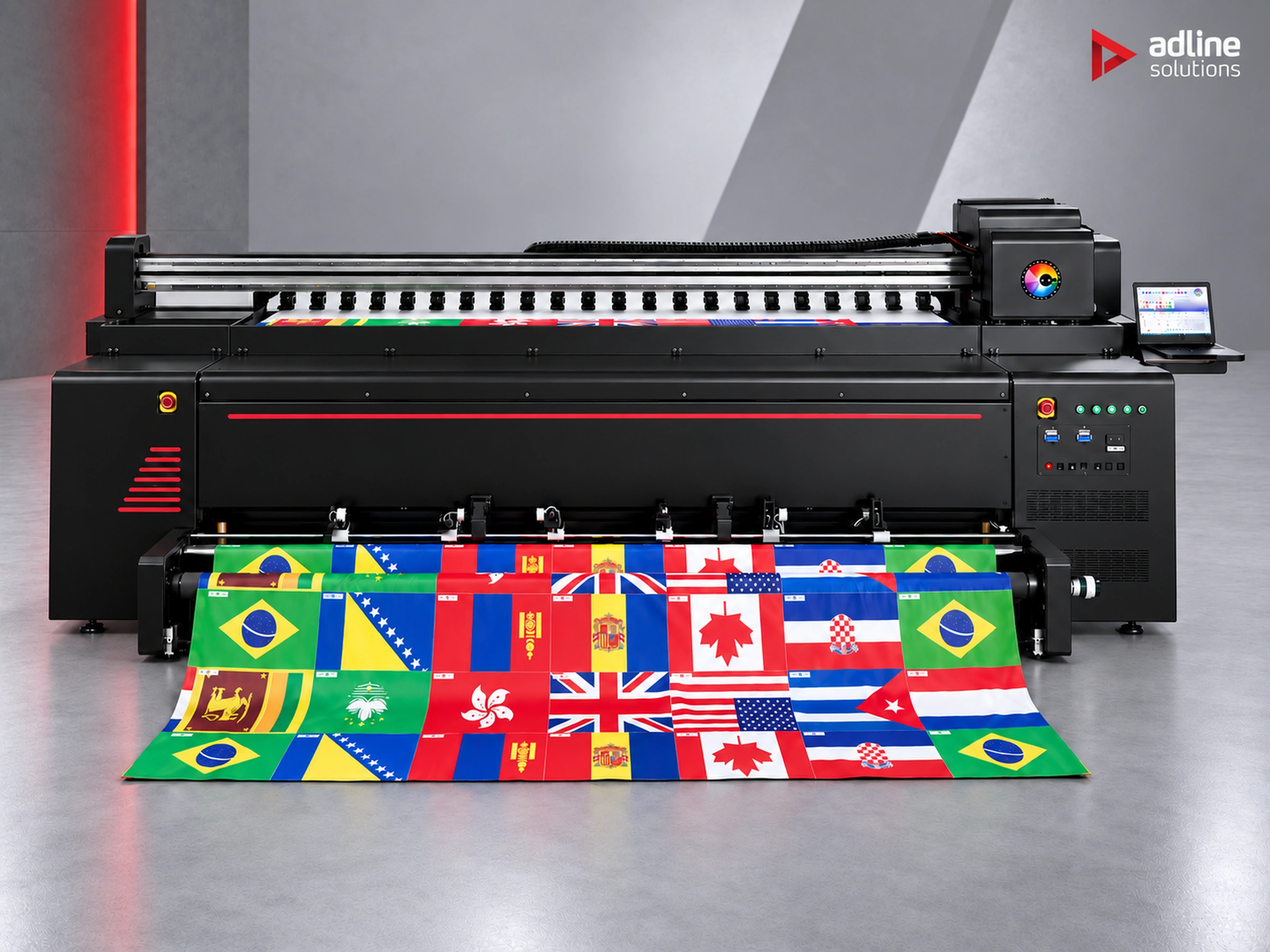
Direct-to-textile sublimation printers.
Choose your process
Roll-to-roll — direct-to-textile
Wide-format direct-to-textile sublimation printers.
In direct-to-textile sublimation the dye ink is printed straight onto the fabric, with no transfer paper in between, and then fixed with heat so that the colour bonds with the fibres. When the heat-fixation unit is part of the printer, printing and fixing happen in one pass through the machine, which shortens the workflow for flags, beach flags and textile banners printed in volume.
1 machine →Heat presses
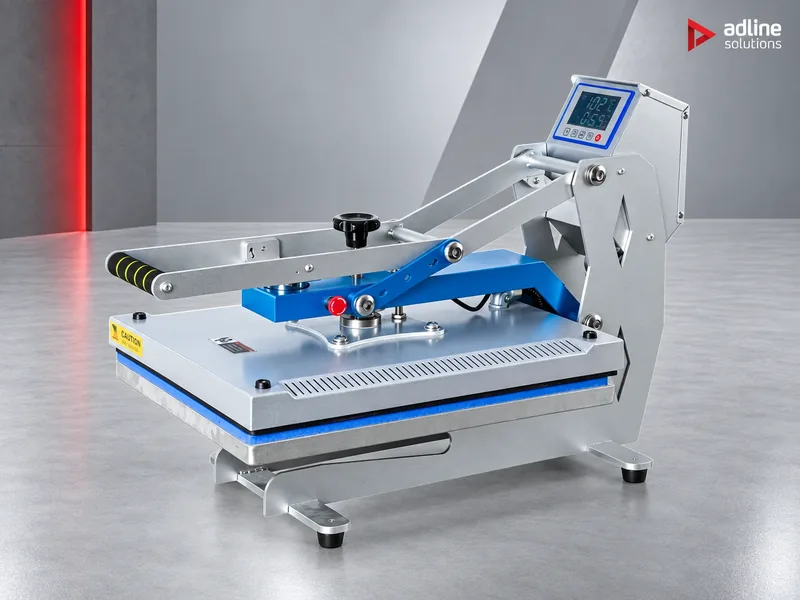
Flat heat presses for transfer, sublimation and flex film, from tabletop to large-format platens.
A heat press finishes almost every transfer process: DTF and DTG after curing, sublimation onto coated substrates, flex and flock film, and screen-printed transfers. The machine does one job, but it has to do it identically on the first piece of the morning and the last piece of the shift. Three things decide whether it does. Temperature has to be uniform across the whole platen, not only under the sensor, which is a question of how the heating element is built rather than of the wattage on the label. Pressure has to be even, which is why an adjustable system under the lower platen matters more than raw force. And the cycle has to end by itself, because an operator who has to remember to lift the platen will eventually scorch a garment. Auto-open presses solve the third point outright: the platen lifts when the timer runs out, the operator is freed between cycles, and the press stops being the bottleneck in a small shop.
1 machine →Applications
- Garment decoration
- Large format
- Signage & advertising
- Textiles
About this range
Dye-sublimation printers for flags, beach flags, textile banners and fabric décor. The Galaxy UD-3200TXD and UD-32R8TXD print 3.2 m wide directly onto the fabric, without transfer paper, and fix the colours with the heat-fixation system built into the same machine — with four or eight Epson i3200-A1 heads depending on the volume.