
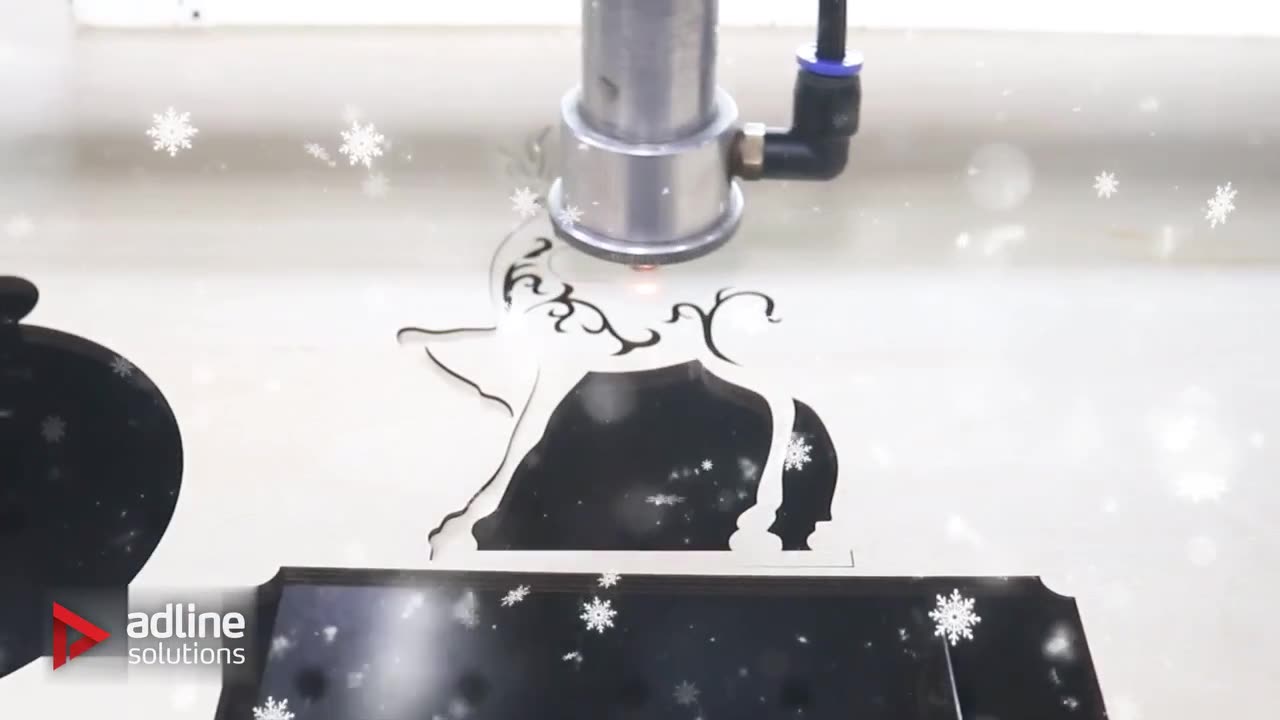
Hanma HM Series CO₂ Laser Engraver & Cutter
In stock: HM-1060, HM-1310
- Reci CO₂ tube of your choice: 100–130 W (W4), 130–160 W (W6) or 150–180 W (W8)
- Cuts up to 20 mm, engraves at 0.025 mm resolution
- Up to 500 mm/s
- Three bed sizes: 1000 x 600, 1300 x 1000 and 1600 x 1000 mm
- Optional CCD camera
- Water cooling with temperature control supplied as standard
- Air assist and fume extraction included
100–180 W glass-tube CO₂ engraver and cutter, 500 mm/s, cutting up to 20 mm, in 1000 × 600, 1300 × 1000 and 1600 × 1000 mm beds.
Which bed size and source? Read the guide- Laser cutting
- Laser engraving
- Wood & MDF
- Acrylic
- Leather
- Paper
- Signage & advertising
Configurations
| Configuration | Differences | Availability |
|---|---|---|
| HM-1060In stock | Working area: 1000 x 600 mm · Laser power: 120 / 150 / 180 W | In stock |
| HM-1310In stock | Working area: 1300 x 1000 mm · Laser power: 120 / 150 / 180 W | In stock |
| HM-1610On request | Working area: 1600 x 1000 mm · Laser power: 120 / 150 / 180 W | On request |
About this machine
HM Series CO2 Laser Engraver & Cutter
The HM series is a glass-tube CO2 machine, with a Reci tube of 100–130 W (W4), 130–160 W (W6) or 150–180 W (W8) chosen with the order, built for the work that fills a sign shop or a model shop: acrylic letters, plywood and MDF parts, leather goods, rubber stamps, engraved gifts, textile panels. It cuts to 20 mm and engraves at 0.025 mm resolution, moving at up to 500 mm/s.
Three bed sizes are built on the same platform. The HM-1060 takes 1000 x 600 mm, which suits a workshop cutting parts from cut-down sheet. The HM-1310 takes 1300 x 1000 mm and the HM-1610 takes 1600 x 1000 mm, both of which take a full sheet of stock without pre-cutting it, and that is usually what decides between them.
What is included matters more at this level than the source does. Every machine in the series ships with water cooling under temperature control, so the tube is never run hot and its life is not spent in the first year; with an air assist system, which keeps the cut edge clean and holds the flame down on acrylic and plywood; and with fume extraction, so the operator is not standing in the smoke of what is being cut.
Applications
- Acrylic letters, panels and display parts
- Plywood and MDF components, model and prototype work
- Leather goods and rubber stamps
- Engraved gifts, awards and personalised items
- Paper, card and textile cutting
- Short-run parts where the material changes from job to job
What it processes
Applicable materials
Acrylic
CutEngrave
Wood
CutEngrave
Plywood
CutEngrave
MDF
CutEngrave
Bamboo
CutEngrave
Leather
CutEngrave
Rubber
CutEngrave
Paper
CutEngrave
Cardboard
CutEngrave
Textiles
CutEngrave
Wool
CutEngrave
Jade
Engrave
Ceramic tile
Engrave
Non-metallic materials only. Results depend on the material grade, thickness and laser power.
Not sure about your material?Ask us
Technical specifications
Performance
- Laser power
- Reci W4, 100 W nominal / 130 W max (standard); optional upgrade to W6 (130–160 W) or W8 (150–180 W)
- Engraving speed
- 500 mm/s
- Maximum cutting speed
- 300 (18 m/min) mm/s
- Cutting thickness
- up to 20 mm
- Resolution
- 0.025 mm
- X/Y repeatability
- ±0.08 mm
- Pulse frequency
- 1 – 1000 Hz
- Maximum engraving depth (wood)
- 2 mm
- Smallest engraved text
- 1 mm
- Positioning
- Red pilot light
Working area
- Working area, HM-1060
- 1000 x 600 mm
- Working area, HM-1310
- 1300 x 1000 mm
- Working area, HM-1610
- 1600 x 1000 mm
- Table
- Aluminium blade strips; honeycomb table optional
Software & control
- Controller
- Trocen DSP motion controller
- Control software
- LaserCAD
- Accepted file formats
- DXF, PLT, AI, BMP; works with AutoCAD and CorelDRAW
- Computer connection
- USB cable, network cable or USB memory stick
Main components
- Laser power supply
- ZYE
- Water chiller
- S&A or JiZhi
- Motors
- Leadshine stepper motors
- Drive belt
- Steel-wire reinforced transmission belt
Power & environment
- Cooling
- Water cooling with temperature control, included
- Air assist
- Included
- Fume extraction
- Included
- Options
- CCD camera
- Power supply
- AC 220 V, 50/60 Hz
Site requirements
- Total power
- up to 3500 W
- Rated current
- 10 – 16 A
- Voltage stability
- ± 5 %
- Grounding
- Dedicated earth, ≤ 4 Ω
- Voltage stabiliser
- At least 5 kW where the mains voltage is unstable
- Chiller coolant
- 10 – 15 L of distilled or purified water
- Compressed air (optional)
- Clean, dry air up to 0.8 MPa; the included air pump gives about 0.05 MPa
- Operating temperature
- 5 – 40 °C
- Operating humidity
- ≤ 80 %
Materials
- Materials
- Acrylic, wood, plywood, MDF, bamboo, leather, rubber, paper, card, textiles, wool; engraving on jade and ceramic tile
Dimensions & weight
- Machine dimensions, HM-1060
- 1550 x 1100 x 1100 mm
- Machine dimensions, HM-1310
- 1850 x 1500 x 1100 mm
- Machine dimensions, HM-1610
- 2150 x 1500 x 1100 mm
- Packed dimensions, HM-1060
- 1650 x 1200 x 1280 mm
- Packed dimensions, HM-1310
- 1920 x 1600 x 1280 mm
- Packed dimensions, HM-1610
- 2250 x 1600 x 1280 mm
- Net weight, HM-1060
- 270 kg
- Net weight, HM-1310
- 450 kg
- Net weight, HM-1610
- 600 kg
- Gross weight packed, HM-1060
- 320 kg
- Gross weight packed, HM-1310
- 500 kg
- Gross weight packed, HM-1610
- 650 kg
Maintenance & safety
- Mirrors and focusing lens
- Check daily; clean with anhydrous ethanol and a cotton swab
- Guide rails
- Lubricate weekly with liquid oil, keeping oil off the belt
- Extraction fan
- Clean every two weeks
- Chiller water and filter
- Replace the water and clean the dust filter every 1 – 2 months
- Laser class
- Class 4
- Laser wavelength
- 10.6 µm
Supplied with
- Documents and software
- User manual, LaserCAD software on USB stick, product certificate
Specifications, images and descriptions are provided for general guidance and may change without notice. Configurations, performance figures and supplied items can vary by production batch and market. The binding specification, scope of supply and terms are those set out in the written quotation we issue for your order.
Application details
Series
HM
Frequently asked questions
What can the HM series cut and engrave?
Acrylic, wood, plywood, MDF, bamboo, leather, rubber, paper, card, textiles and wool, and it engraves jade and ceramic tile. Typical work is acrylic letters and display parts, plywood and MDF components, model and prototype work, leather goods, rubber stamps, engraved gifts and awards, and textile panels, where the material changes from job to job. Send us a sample of your material and we will tell you how it behaves.
Which bed size should we choose?
Three sizes are built on the same platform. The HM-1060 takes 1000 × 600 mm and suits work from cut-down sheet. The HM-1310 takes 1300 × 1000 mm and the HM-1610 takes 1600 × 1000 mm; both take a full sheet of stock without pre-cutting, and the sheet size you buy is usually what decides between them.
How thick can it cut?
Up to 20 mm. It engraves at 0.025 mm resolution and moves at up to 500 mm/s. Send us the materials and thicknesses you cut most and we will advise on the tube.
Which laser power should we choose?
Three Reci glass CO₂ tubes can be fitted on all three bed sizes – 100–130 W (W4), 130–160 W (W6) or 150–180 W (W8) – and the tube is chosen with the order. Tell us your thickest regular material and how much of your work is cutting rather than engraving, and we will recommend the tube.
Are cooling and extraction included?
Yes. Every machine in the series comes with temperature-controlled water cooling, so the tube is not run hot; an air assist system, which keeps the cut edge clean and holds the flame down on acrylic and plywood; and fume extraction, so the operator is not standing in the smoke.
Is a camera available?
Yes, a CCD camera is available as an option on the HM series. Tell us which jobs you would use it for and we will include it in the quote for the bed size and tube power you choose.
What does it need on site?
A 220 V supply (50/60 Hz, voltage stable within ± 5 %) with its own earth of no more than 4 Ω. The machine draws up to 16 A and up to 3.5 kW in total; where the mains voltage is unstable, add a voltage stabiliser of at least 5 kW. The chiller takes 10 – 15 L of distilled or purified water, and the included air pump supplies the air assist; for a cleaner cut you can connect clean, dry compressed air of up to 0.8 MPa. Keep the room between 5 and 40 °C, below 80 % humidity and away from heavy dust such as metal grinding.
Which software does it use?
LaserCAD, running a Trocen DSP controller. Jobs are drawn or imported from AutoCAD or CorelDRAW as DXF, PLT, AI or BMP files and sent to the machine by USB cable or network cable, or run from a USB memory stick. Once a job is sent, the machine's own controller runs it, so the computer stays free.
What routine maintenance does it need?
Check the mirrors and the focusing lens every day and clean them with anhydrous ethanol and a cotton swab; lubricate the guide rails weekly with liquid oil, keeping oil off the belt; clean the extraction fan every two weeks; and replace the chiller water and clean its dust filter every one to two months. Well-kept cooling also extends the life of the laser tube.