Mingda · D Series

MINGDA MD-600D Ultra

On request

  • 600 mm cubic build volume
  • Dual 350 °C extruders, 45 °C chamber
  • AI print failure detection
  • Closed-loop motion, 20 µm XY resolution
  • Moisture-proof 2 × 3 kg filament chamber
  • 10-inch touchscreen, remote printing

Fully enclosed 600 × 600 × 600 mm dual-extruder industrial printer with 350 °C hotends, AI print monitoring and a moisture-proof 3 kg filament chamber.

Request a quote
  • Functional parts
  • Engineering polymers
  • Tooling & jigs
  • Large format
  • Industrial production

About this machine

The MD-600D Ultra is built around a 600 × 600 × 600 mm working volume: a large-format, enclosed IDEX machine for full-size parts that would otherwise need to be split, joined and finished.
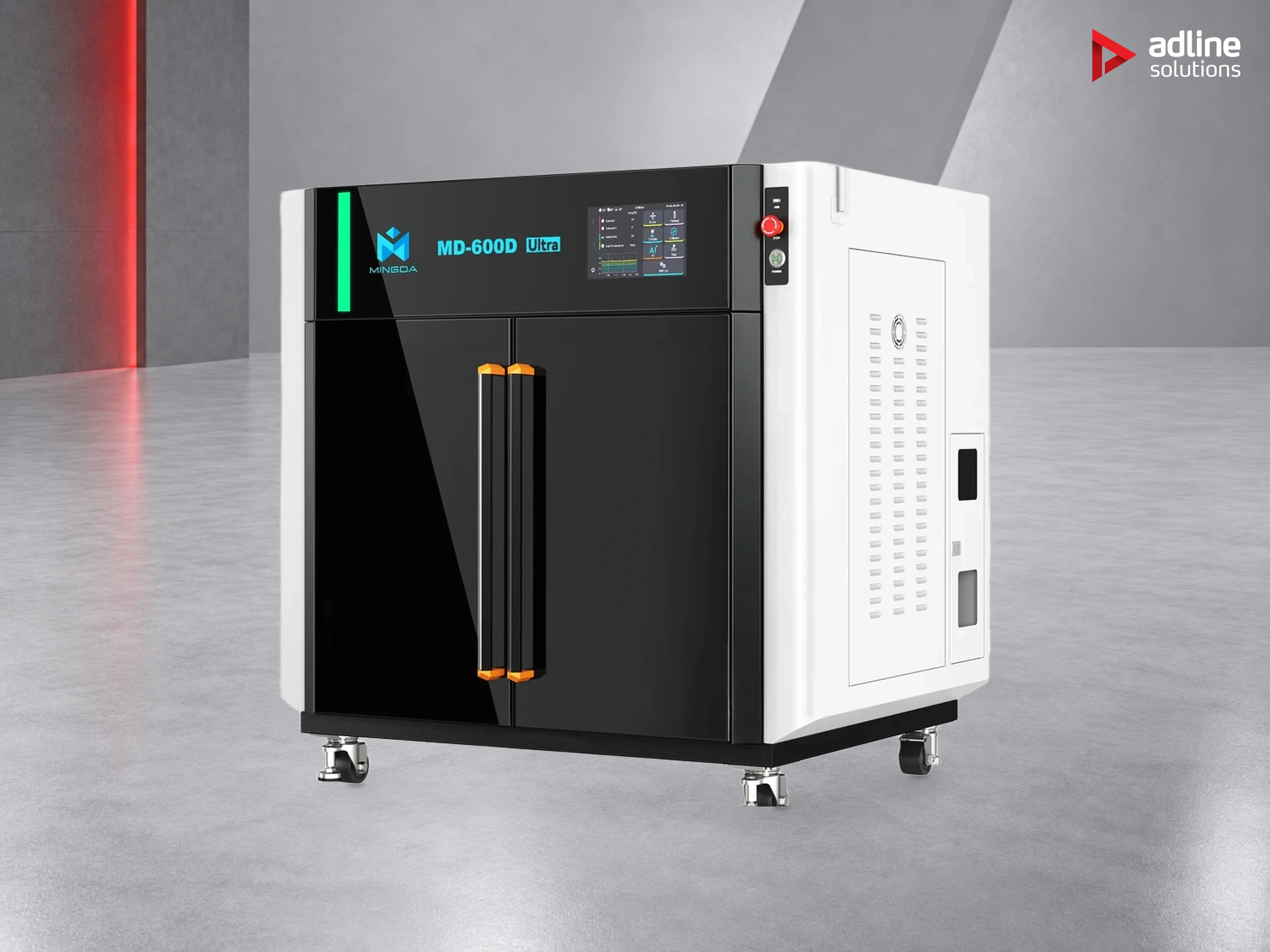
MINGDA MD-600D Ultra large-format industrial 3D printer

A lighter head, and why it shows in the surface

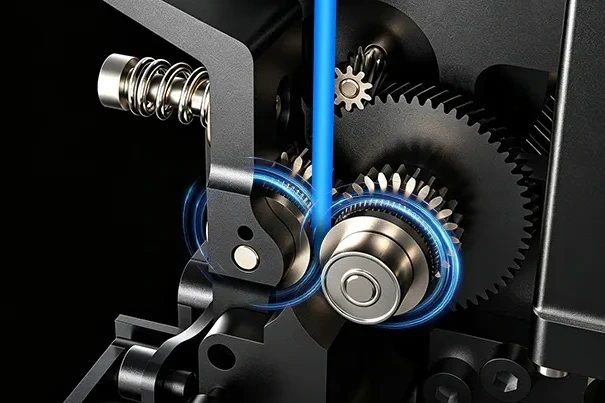
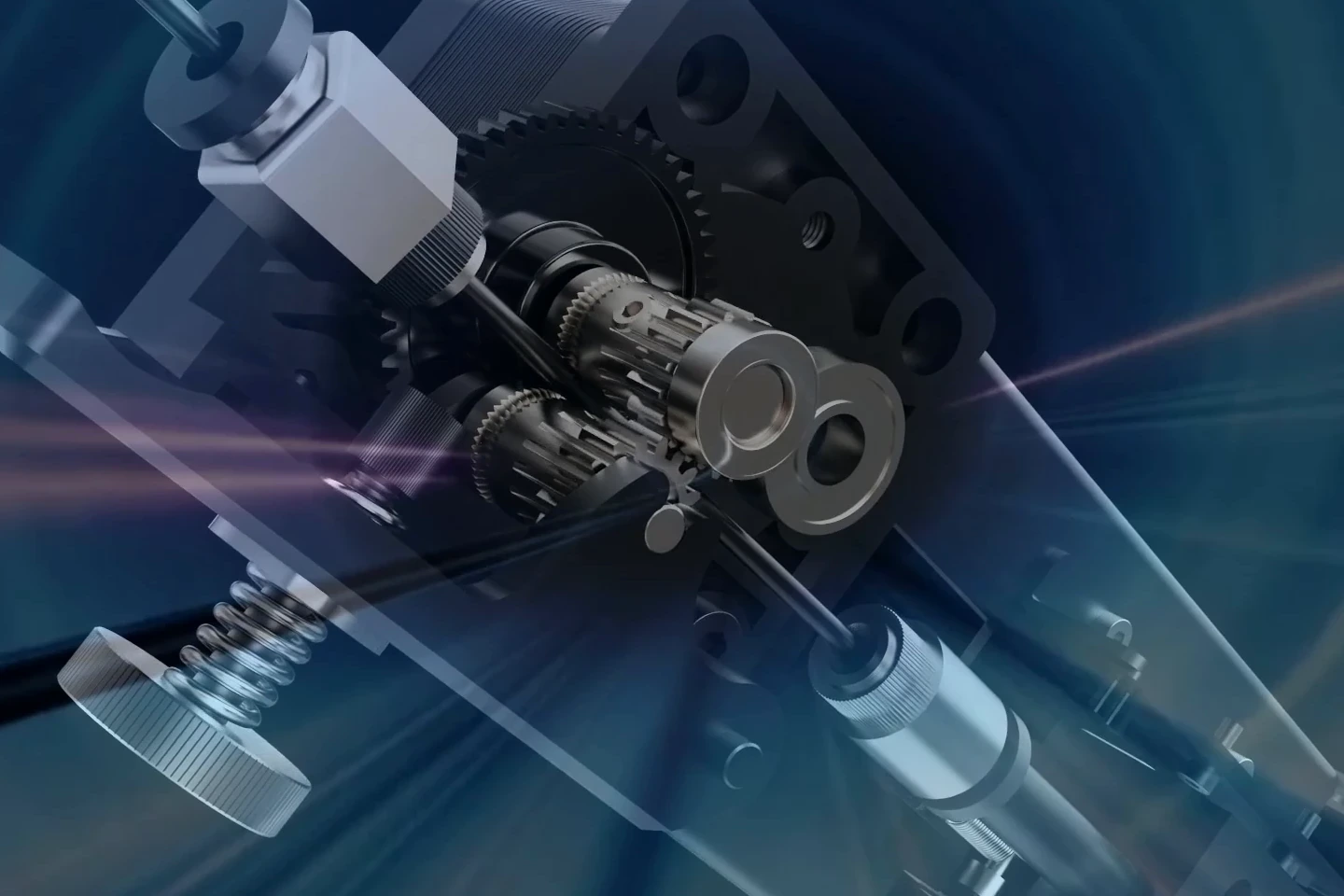
The redesigned extruder is 33% lighter. Less moving mass means less inertia when direction changes, so the motion system has less vibration to settle before the next line is laid down. The drive gears have also been reworked for more consistent feeding and a design life of 2.5–3 years, based on eight hours a day, five days a week.
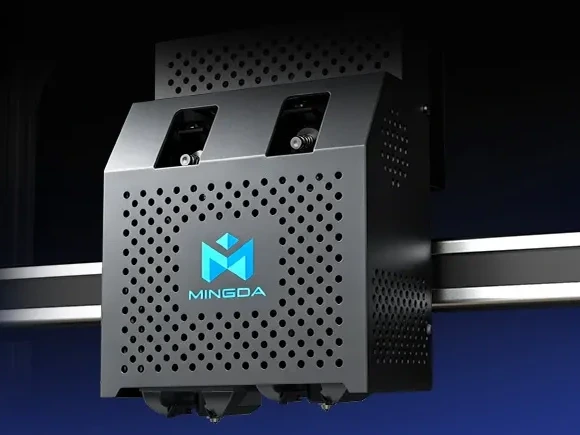
Redesigned lightweight MINGDA Ultra extruder
Close-up of the Ultra extruder drive gears

Speed that survives the part size

The motion system runs at up to 300 mm/s with acceleration up to 10,000 mm/s², reaching 300 mm/s in 0.02 seconds. The high-flow hotend is rated at up to 40 mm³/s. MINGDA's working figures are 200 mm/s for PLA, 180 mm/s for PETG and 100 mm/s for PET-CF.

Two additional fans increase airflow by about 40%, helping the deposited material set before the next layer arrives.
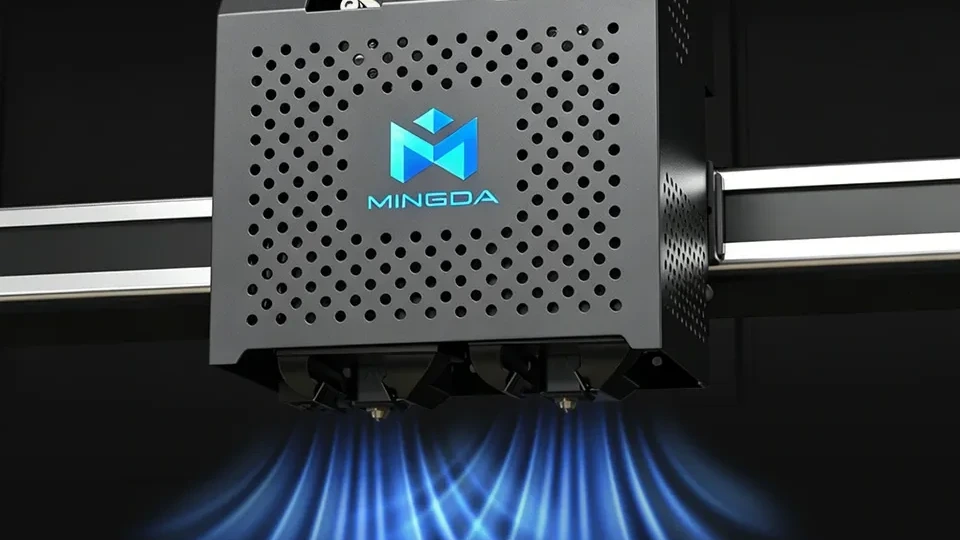
Dual airflow cooling beneath the MINGDA Ultra extruder

It watches the print for you

The camera watches for nozzle blobs, first-layer problems, warping, spaghetti failures and foreign objects. Automatic Z-offset calibration replaces the feeler-gauge method. After a power failure, the platform lowers, the filament retracts and the job can resume from its last recorded point.
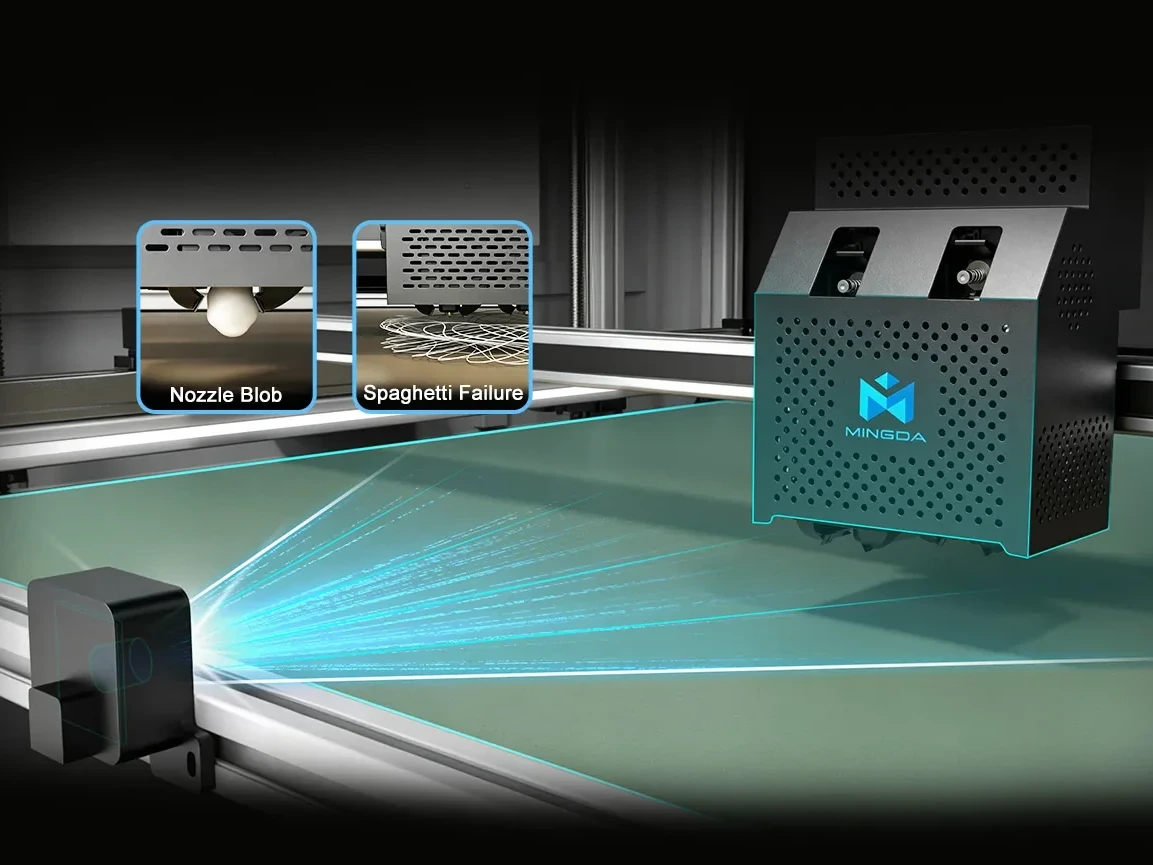
Camera-based print-failure detection across the print bed
Assisted filament feeding mechanism inside the extruder

Set up once, then run it

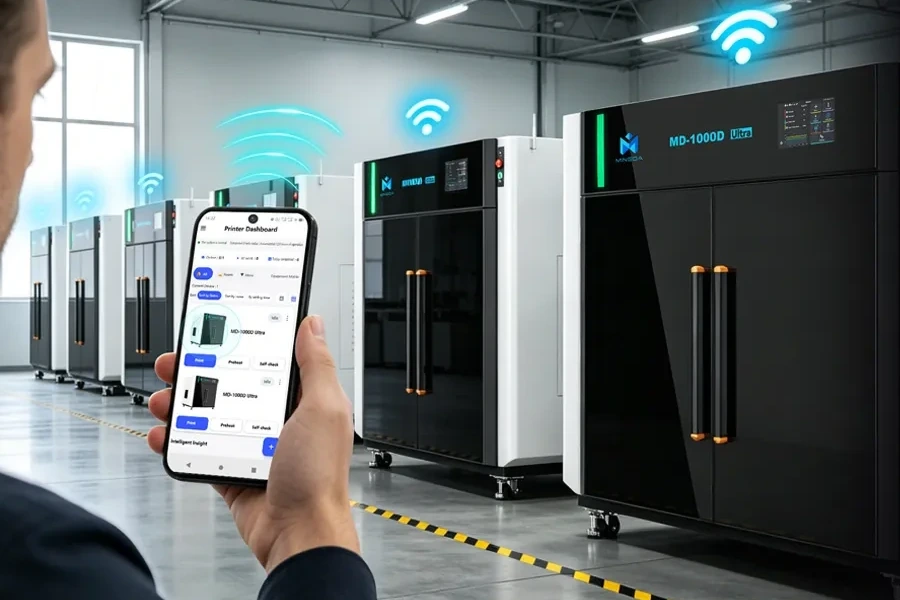
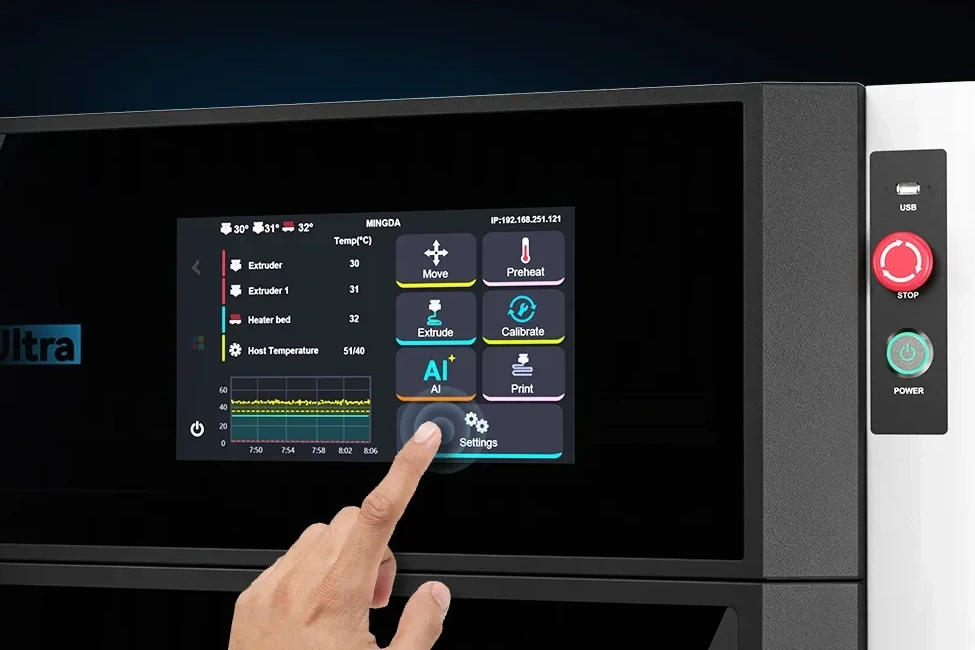
The machine arrives factory assembled and calibrated. Validated material profiles are supplied in MINGDA's slicer, the 10-inch touchscreen replaces physical control buttons, and the mobile app provides remote monitoring and basic print control.
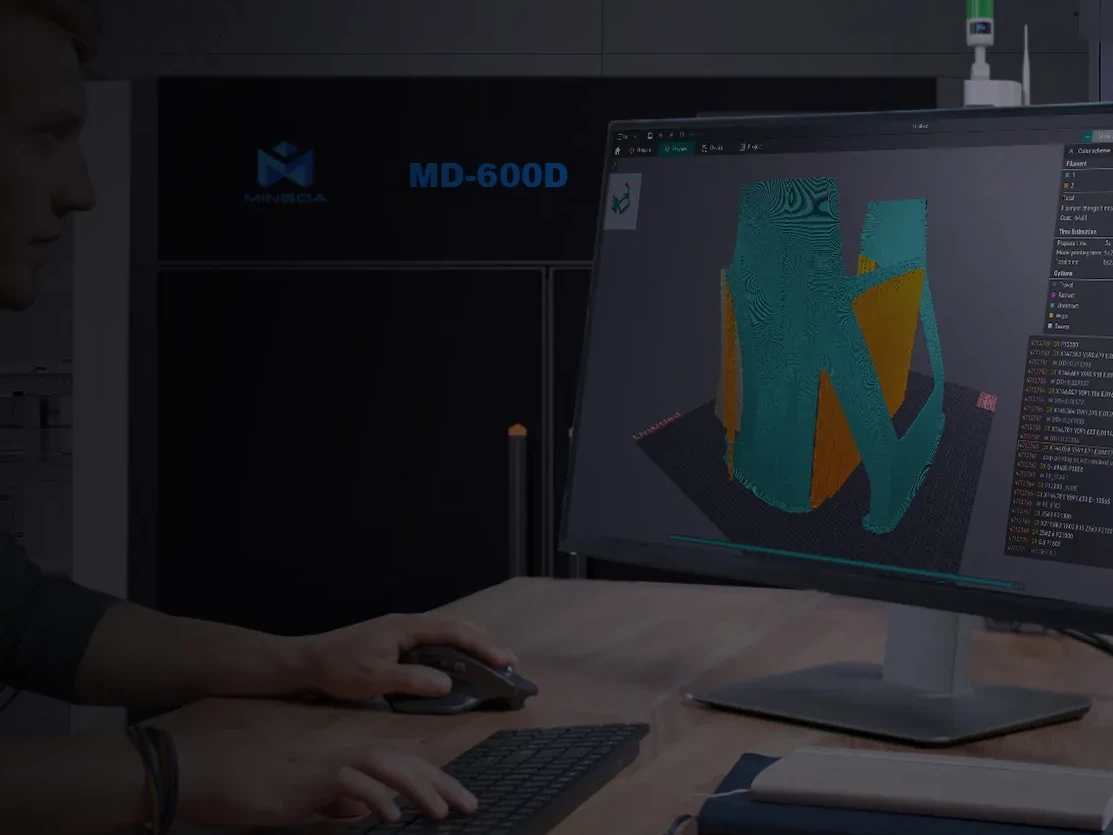
Large-format model prepared in the MINGDA slicer interface
10-inch integrated touchscreen on the MINGDA Ultra
Mobile monitoring for a group of MINGDA Ultra printers

A worked example

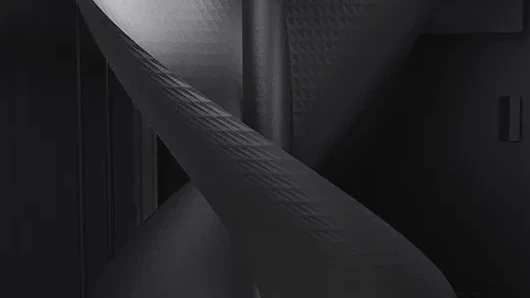
MINGDA's example is a 600 × 500 × 600 mm wind-turbine component in PLA-HF. At 200 mm/s, the reported print time is about four days, compared with about eight days in ordinary PLA at 50 mm/s. These are the manufacturer's figures.
Large wind-turbine component printed on the MINGDA MD-600D Ultra

Where it is used

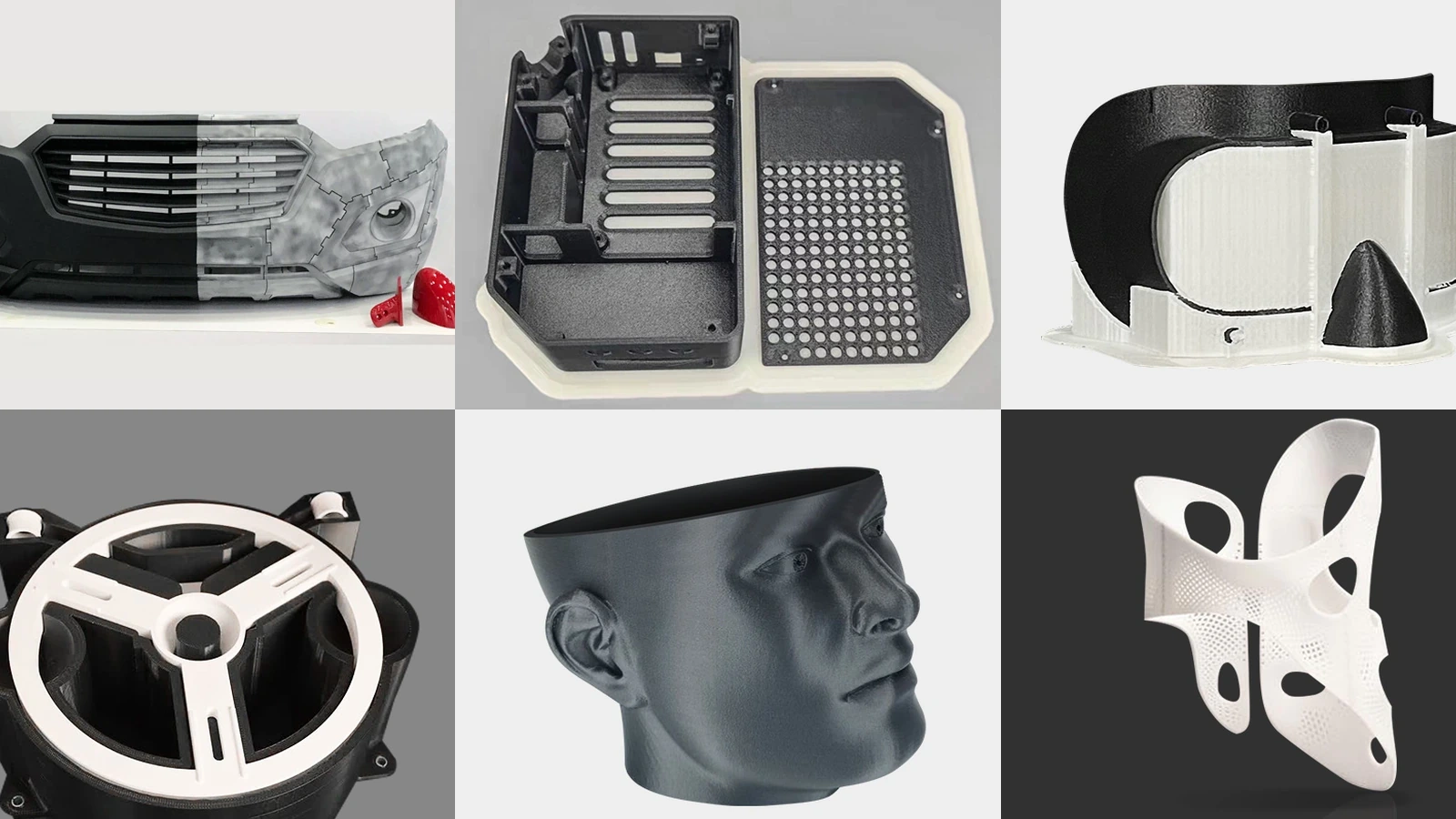
Applications include automotive work, injection mould making, functional prototyping, furniture, portrait work and medical projects.
Application examples for the MINGDA MD-600D Ultra

On the floor

The machine measures 1,325 × 965 × 1,265 mm and draws up to 2,400 W. Shipping weight is 335 kg in 2.2 m³. It uses closed-loop motion, a hotend rated to 350 °C and an enclosed chamber rated to 45 °C.

Technical specifications

Printing

Print Technology
FDM (Fused Deposition Modeling)
Print Volume
600 × 600 × 600 mm
Printing Nozzle
Dual nozzle
Layer Height
0.3 - 0.36 mm (determined by the standard nozzle size)
Filament Diameter
1.75 mm
Filament Types
PLA, PETG, PETG-CF, PET-CF/GF, ABS-CF/GF, PA12-CF, HtPA-CF/GF, HtPA-GF25/CF25, PPS, PPS-CF/GF, S-Multi, S-HtPA, etc.
Nozzle Diameter
0.6 mm (optional 0.4 mm, 0.8 mm)
Print File Type
Gcode

Temperature & climate

Nozzle Temperature
Max 350 °C
Hot Bed Temperature
Max 110 °C
Chamber Temperature
45 °C

Speed

Max Printing Speed
300 mm/s (recommended: PLA 200 mm/s · PETG 180 mm/s · PET-CF 100 mm/s)
Moving Speed
Max XY 500 mm/s; Max Z 15 mm/s

Electrical & control

Maximum Power
2400 W
Input Voltage
220 V 50/60 Hz
Connection
WiFi, Ethernet, USB
Screen
10-inch colour touchscreen

Safety & certification

Safety Design
Three-colour warning light, emergency stop
Regulatory Certification
CE

Software

Slicing Software
MINGDA Slicer
Data Type
.3mf .stl .stp .step .amf .obj
Operating System
Windows / macOS
Firmware
Klipper

Functions

Printing Detection
AI detection
XY-Offset Technology
Camera calibration
Z-Offset Technology
Probe calibration
Filament Detection
Pause printing
Cooling System
Air-cooled
Machine Detection
Power-on self-check
Remote Management
Remote monitoring & control; remote printing
Resume Printing
Power-loss recovery
Printing Performance
Input shaper
Mobile App
Start, pause and stop printing from the MINGDA mobile app

Mechanics

Printing Platform
10 mm thick aluminium plate + magnet + PEI
Leveling Method
Fast auto-levelling
Extruder Type
Dual extruders
Resolution
XY 20 µm; Z 10 µm
Printing Chamber
Enclosed chassis
Motion System
Closed-loop control system
Filament Chamber Design
2 rolls of 3 kg filament, auxiliary feeding, moisture-proof chamber

Dimensions & weight

Machine Dimensions
1325 × 965 × 1265 mm
Package Dimensions
1430 × 1080 × 1450 mm
Package Weight
335 kg / 2.2 CBM

Specifications, images and descriptions are provided for general guidance and may change without notice. Configurations, performance figures and supplied items can vary by production batch and market. The binding specification, scope of supply and terms are those set out in the written quotation we issue for your order.

Application details

Recommended for

Manufacturers printing large functional parts, tooling and jigs in carbon- and glass-filled polymers.

Series

D Series

Frequently asked questions

What is the MD-600D Ultra suited to?

Large parts printed in one piece in a 600 × 600 × 600 mm enclosed build volume, rather than split and joined. Applications include automotive work, injection mould making, functional prototyping, furniture, portrait work and medical projects. MINGDA's example is a 600 × 500 × 600 mm wind-turbine component.

How long does a large print take?

MINGDA's wind-turbine example in PLA-HF took about four days at 200 mm/s, against about eight days in ordinary PLA at 50 mm/s; those are the manufacturer's figures. Maximum print speed is 300 mm/s, with recommended speeds of 200 mm/s for PLA, 180 mm/s for PETG and 100 mm/s for PET-CF.

What changed in the Ultra extruder?

The redesigned extruder is 33% lighter, so there is less vibration to settle at each change of direction and the surface benefits. The drive gears were reworked for more consistent feeding, with a design life of 2.5 – 3 years at eight hours a day, five days a week. Two extra fans increase airflow by about 40%.

How does it handle filament and moisture?

A moisture-proof chamber holds two 3 kg rolls of 1.75 mm filament with auxiliary feeding. Filament detection pauses the print if the supply runs out, and power-loss recovery resumes from the last recorded point.

How is the print monitored and controlled?

An AI camera watches for nozzle blobs, first-layer problems, warping, spaghetti failures and foreign objects. You run the machine from a 10-inch touchscreen, and the MINGDA mobile app lets you start, pause and stop printing remotely. Files come from MINGDA Slicer (.3mf, .stl, .stp, .step, .amf, .obj) over WiFi, Ethernet or USB.

What does it need on site?

A 220 V, 50/60 Hz supply for up to 2400 W, and floor space for 1325 × 965 × 1265 mm. It ships at 335 kg in a 1430 × 1080 × 1450 mm package (2.2 m³). It arrives factory assembled and calibrated, is CE certified and has a three-colour warning light and emergency stop.