
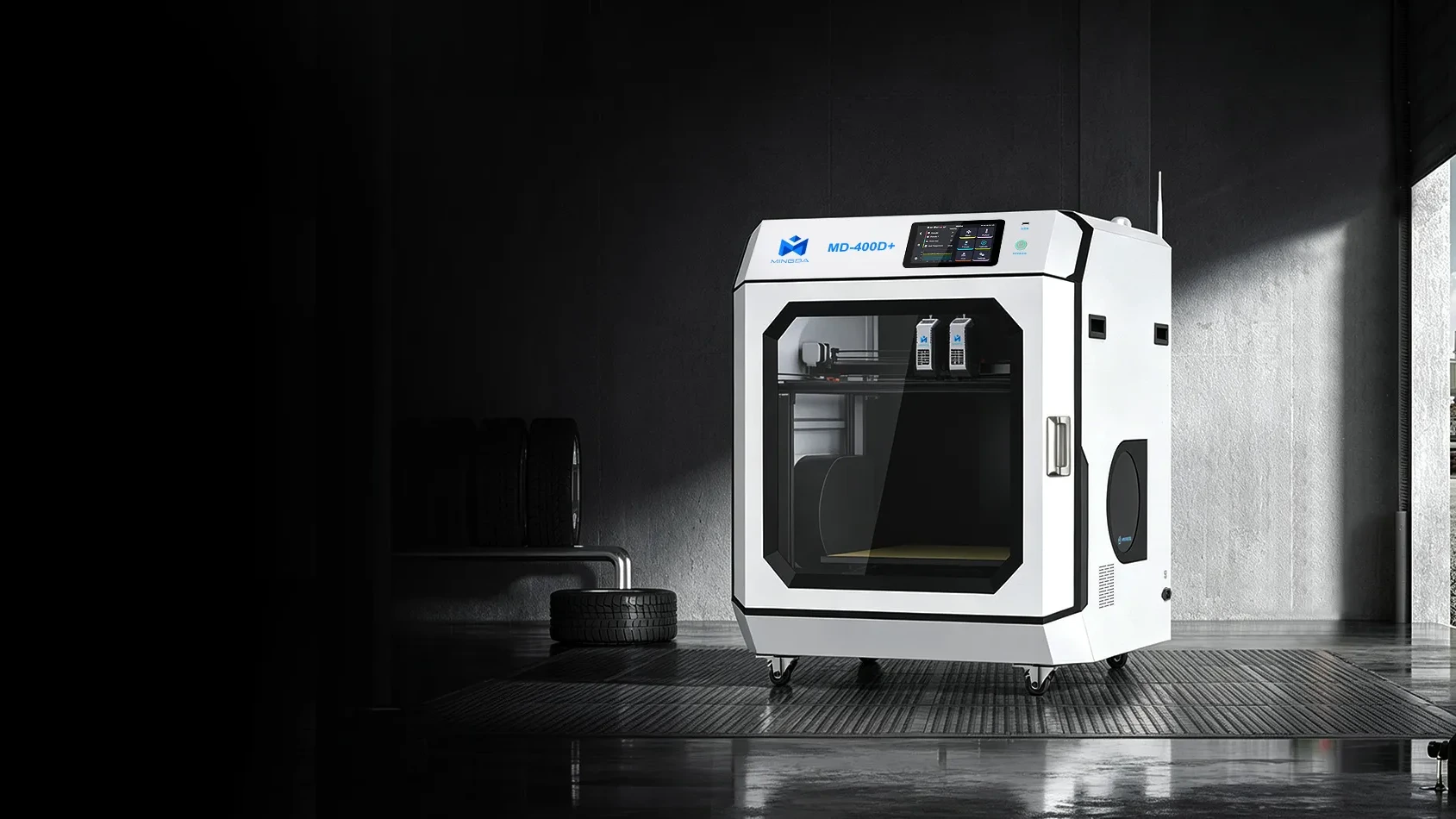
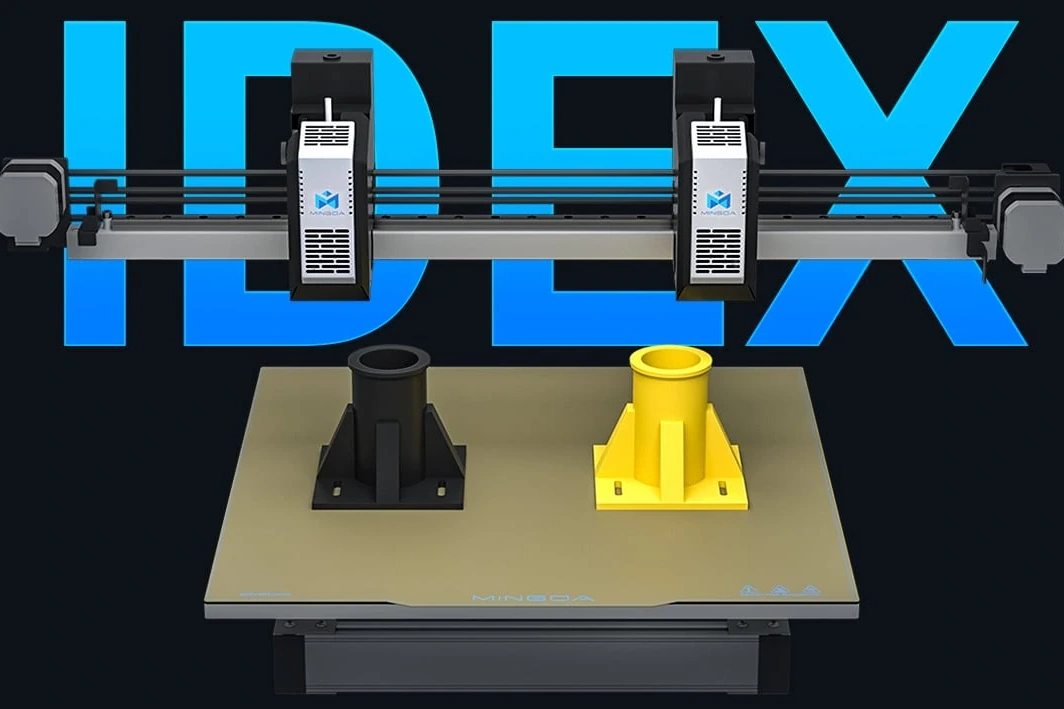
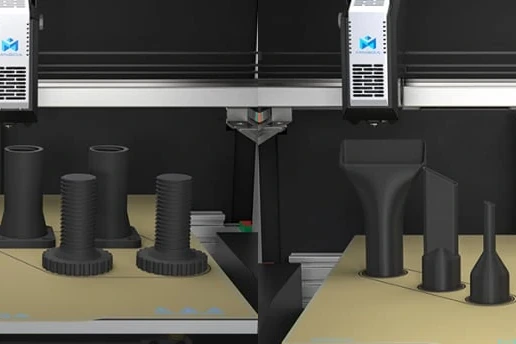
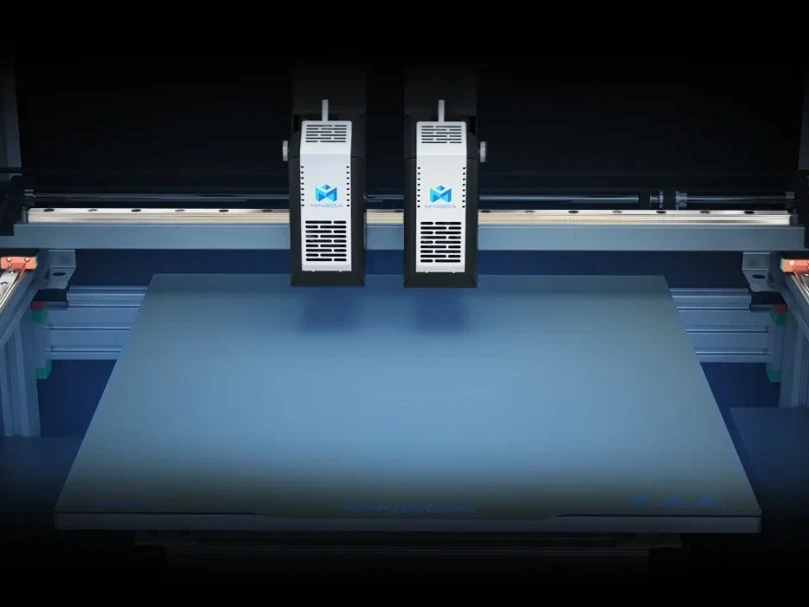
The MD-400D+ is an independent dual extruder — two heads that move separately on the same 400 × 400 × 400 mm build. That one difference is what makes clean two-material printing possible: each nozzle parks out of the way when it is not printing, so it cannot ooze onto the part or contaminate the other material.
On a single-head machine, printing two materials means purging one out of the hotend before the other can start. The waste tower that comes with it can use more filament than the part. Here there is no purge and no tower.
Two heads, two materials, a clean seam
Because the materials never share a melt path, the boundary between them stays sharp — no staining, no blended transition zone along the seam. On a two-colour part that is the difference between a crisp edge and a smeared one; on a two-material part it is the difference between the interface holding and the interface failing.
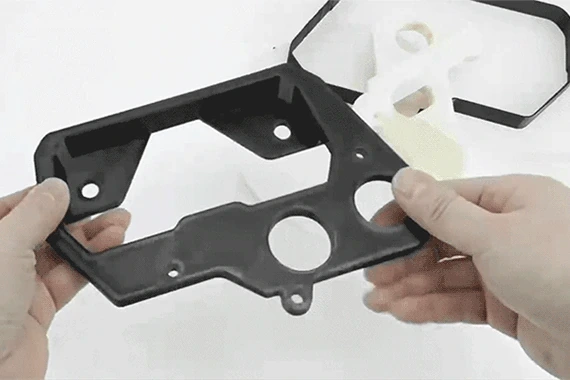
Support you can actually remove
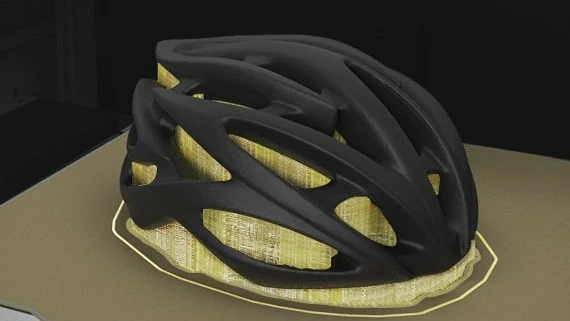
The second head is most useful carrying support material rather than a second colour. Breakaway support snaps off and leaves the supported face smooth, instead of the scarred surface you get when support is printed in the model's own material. Water-soluble support goes further: the part goes in water and the support dissolves, which is the only practical way to print enclosed internal geometry and hollow structures.
What two materials are actually for
Combining materials in one part is where a dual extruder earns its cost:
- Function. A rigid PETG body with TPU where the part has to flex or grip, printed as one piece.
- No assembly. A multi-part object prints whole, so the interconnections are printed rather than glued or bolted — and are stronger for it.
- Cost. A cheap filament through a large nozzle on the infill, the good material and a fine nozzle on the exterior. The budget goes into the surface anybody sees.
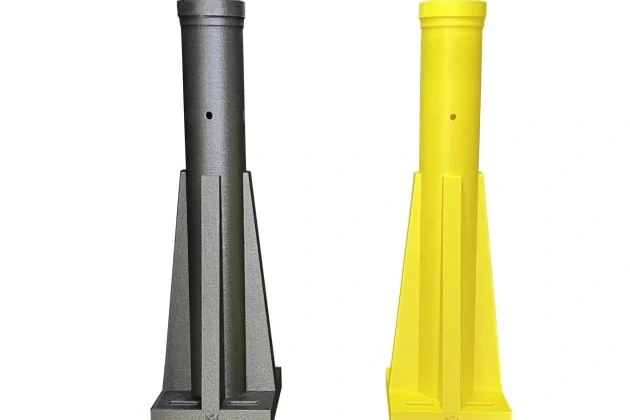
Or print two of everything
When the job needs one material, the second head doubles throughput instead. Copy Mode prints the same part twice at once — a straightforward halving of the queue for batch work. Mirror Mode takes a symmetrical part, prints one half and its mirror image simultaneously, and cuts the run roughly in half.
Built to run fast, not just quoted fast
Klipper firmware drives up to 300 mm/s travel and 200 mm/s printing, at 10,000 mm/s² — 0 to 300 mm/s in 0.02 seconds — with 40 mm³/s of flow. Industrial linear rails, CNC-ground to micron tolerances, keep that speed from turning into surface artefacts, and a dual cooling system with an aerodynamic duct sets the layers before the head comes back round.
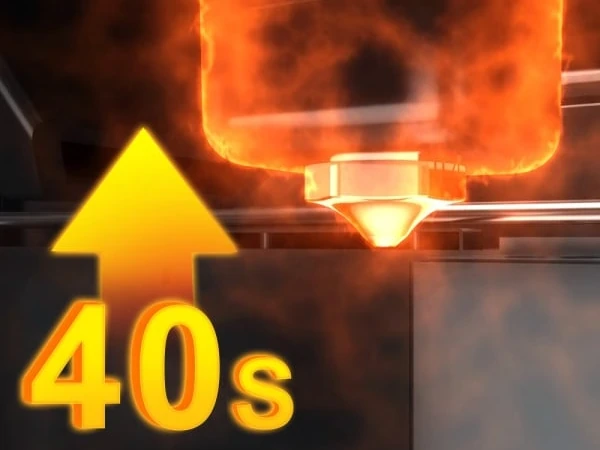
The hotend reaches 200 °C in about 40 seconds, and the heat-up time is the same on 220 V and on 110 V — a detail that matters if the machine moves between sites. Maximum nozzle temperature is 350 °C, with a 45 °C chamber, so engineering polymers are in range rather than aspirational.
A worked example
MINGDA's reference job is a bicycle helmet, 266 × 210 × 130 mm, printed in PLA-HF with PVA support at 200 mm/s: about 34 hours, against roughly four days in ordinary PLA at 50 mm/s. Those are the manufacturer's test figures, given for reference — a helmet is a good illustration because it needs the soluble support to come out at all.
Running it
A power-on self-check tests the extruder, heated bed, camera, auto-levelling and fans before a job starts and reports on the 7-inch screen, which runs in several languages. Filament in the two independent sealed bins stays dry between runs. A shop with more than one machine can drive them together for batch production, and jobs can be sent and monitored remotely.
The machine is 758 × 660 × 911 mm and draws up to 800 W on 100–240 V, 50/60 Hz. It ships at 126 kg in 0.73 m³.