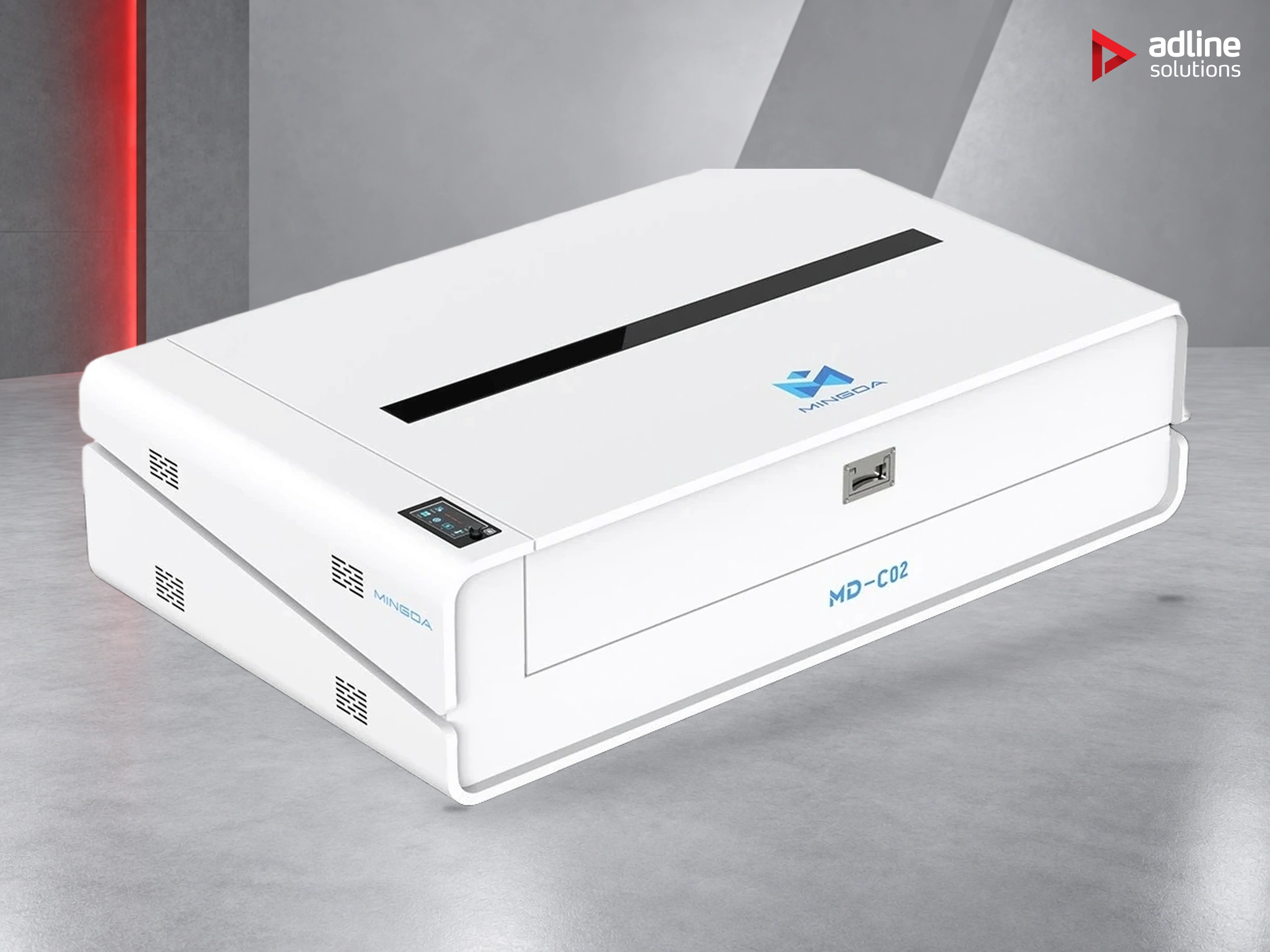
The MD-C02 is the curing half of a channel-letter line. It takes letter shells straight off an AD-Series printer, already filled with resin, and cures them under UV in about an hour — no alignment jig, no pressure, no distortion of the shell, and no resin leaking out of the seams.
At 1200 × 800 mm the platform holds a full print bed's worth of letters in one cycle, so curing does not become the bottleneck behind the printer. Everything is set from one panel: pick a programme, close the lid, and the machine runs fan speed, exposure and timing on its own.
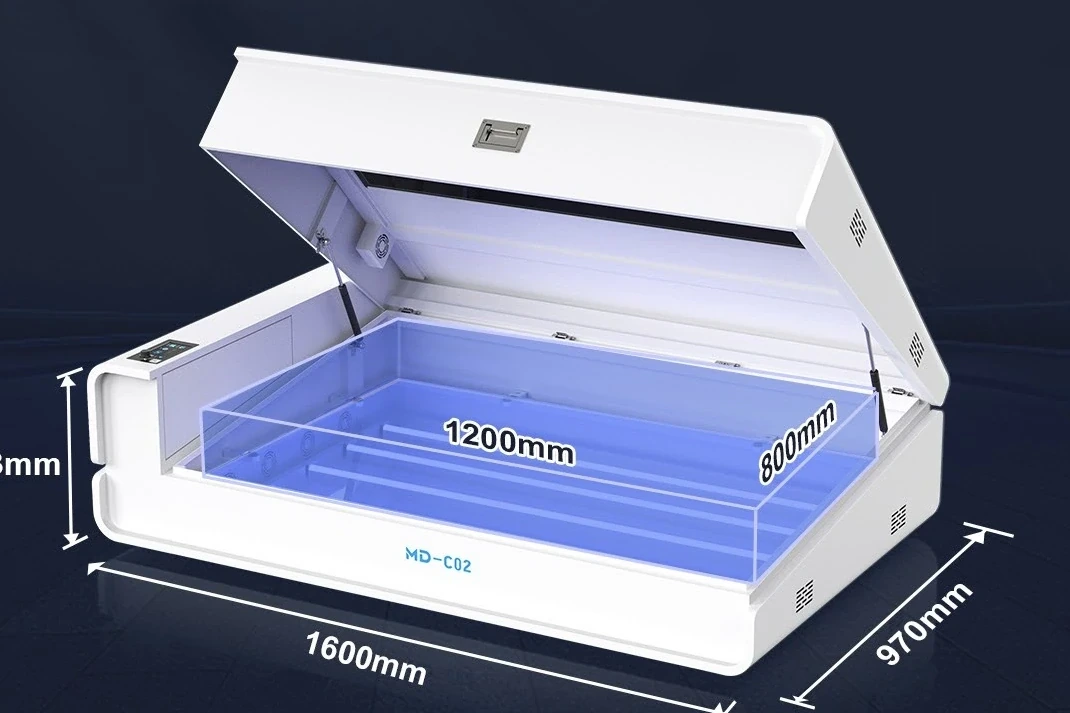
A full bed of letters in one cycle
The curing chamber measures 1200 × 800 mm — matched to the AD-F4's print area, so a complete set of shells moves from printer to curing platform without being split into batches. The machine itself is 1600 × 970 × 433 mm and sits on a bench or a stand beside the printer.
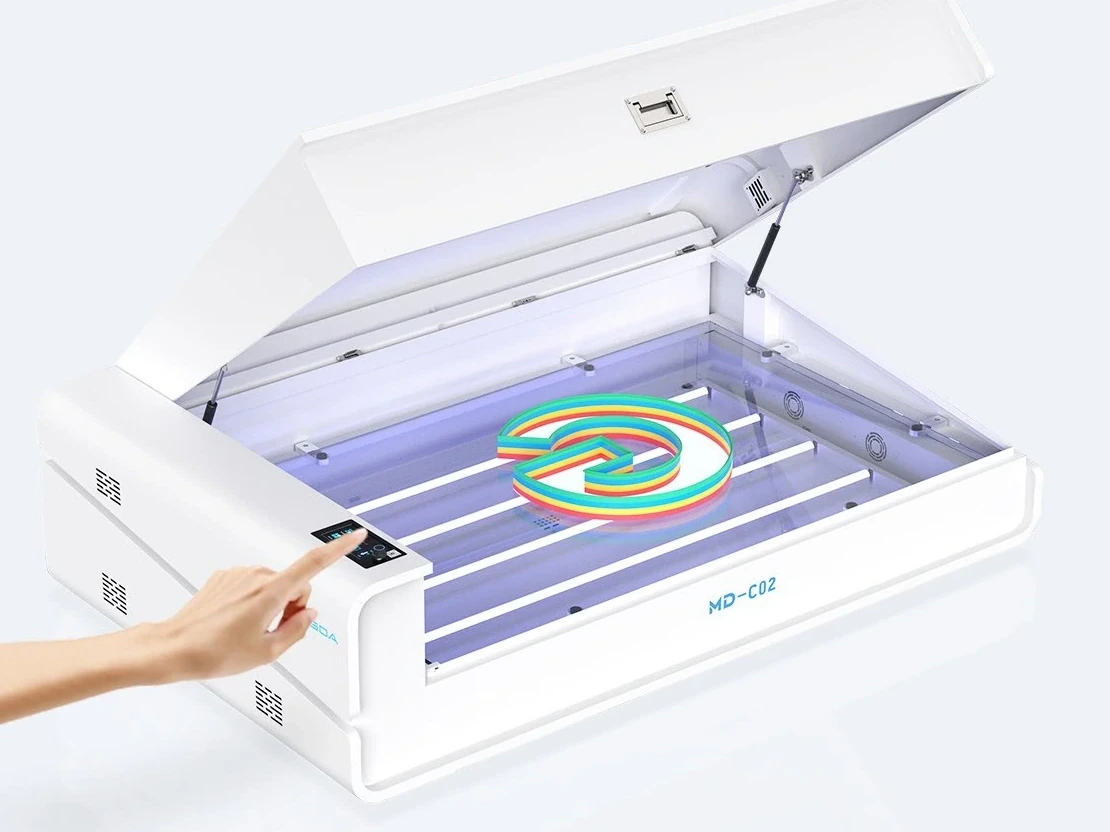
About an hour per cycle, at 230 W
A standard cycle takes roughly 60 minutes and the machine draws 230 W while it runs — low enough that a full production day of curing adds little to the electricity bill. It runs on single-phase 110–220 V, 50/60 Hz, so it needs no special supply.
Seven programmes, one button
The controller holds seven preset programmes covering 10 to 70 minutes. Each one sets its own fan speed and light timing, so a thin acrylic face and a deep filled letter each get the exposure they need. You set the parameters once; after that it is a single press.
| Programme | Fan | Curing time | Light timing |
|---|---|---|---|
| 1 | 50 % | 10 min | 10 s |
| 2 | 60 % | 20 min | 10 s |
| 3 | 70 % | 30 min | 10 s |
| 4 | 80 % | 40 min | 9 s |
| 5 | 90 % | 50 min | 8 s |
| 6 | 100 % | 60 min | 7 s |
| 7 | 100 % | 70 min | 6 s |
Even light, and air that keeps moving
The letters sit on a transparent glass plate rather than a solid tray, so UV reaches the resin evenly from below and the light does not fall off towards the edges of the bed. The plate is heat-resistant and sealed against dust, which keeps transmission stable over time instead of hazing over.
Four fans handle extraction and cooling together, pulling the fumes given off during curing through an air-purification stage before they reach the room. That matters in a sign shop where the curing machine usually sits a metre from someone's bench.
Where it sits in the workflow
- 1Print the shellsLetter shells come off the AD-Series printer, in any font or profile.
- 2Fill with resinGlue is filled into the shells — no jig, no alignment step.
- 3CureThe shells go onto the glass platform and a programme is selected.
- 4Finished lettersThey come out cured, dimensionally stable and smooth on the face.
Work made on this machine
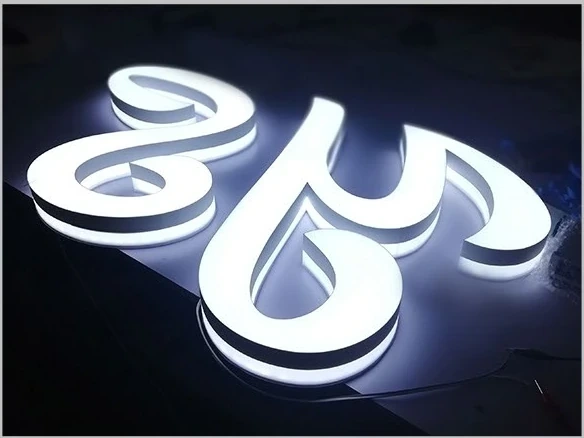
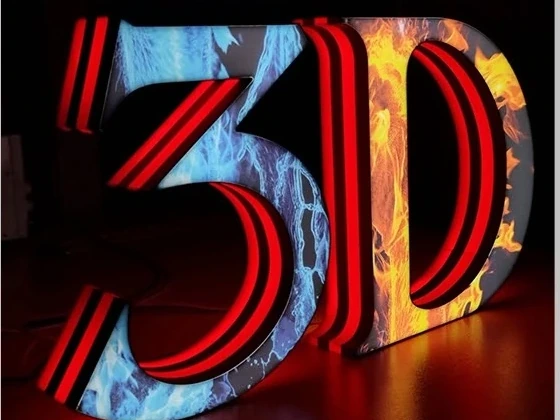
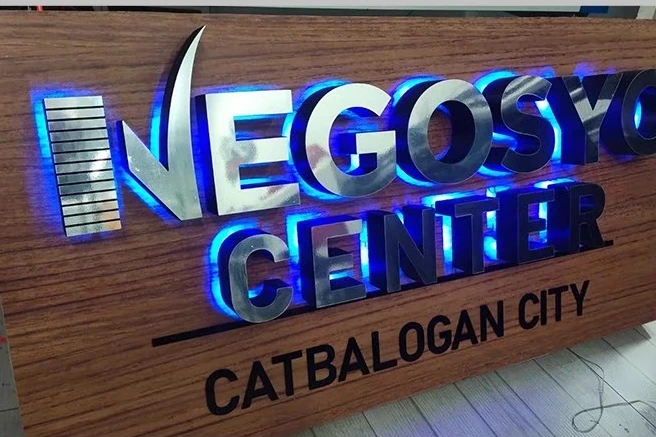
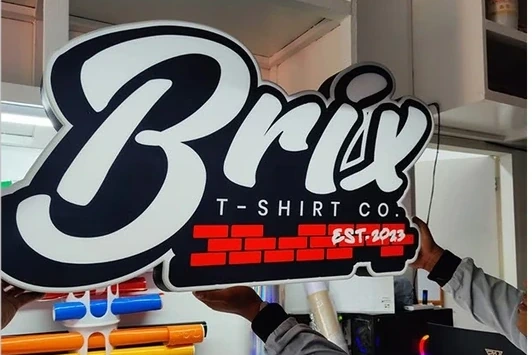
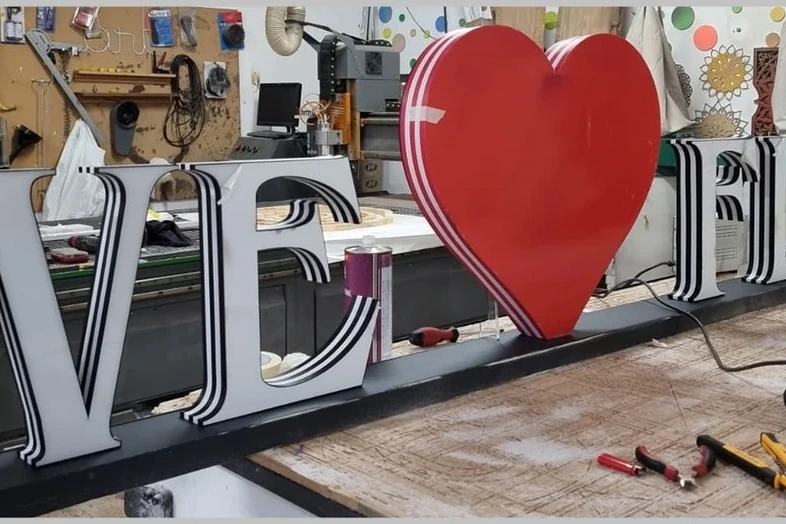
Illuminated signage, shop fascias, interior lettering and logo walls — the examples below were produced on an MD-C02 line.