
Explosion-proof — aluminium, magnesium, titanium
Combustible dust, built ATEX-minded
Applications
- Aluminium & magnesium
- CNC cutting
- Explosion-proof
- Laser cutting
- Metal
About this range
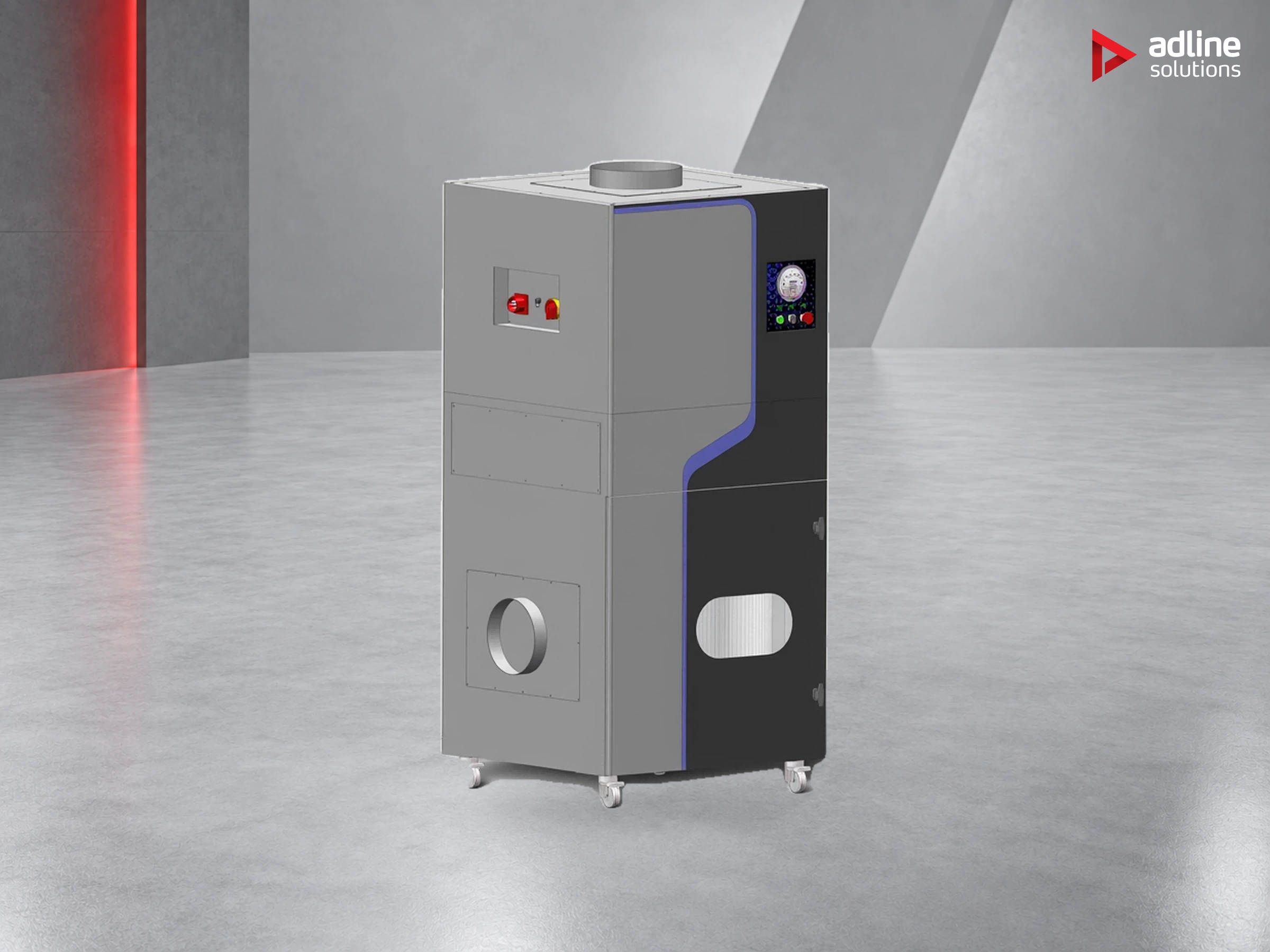
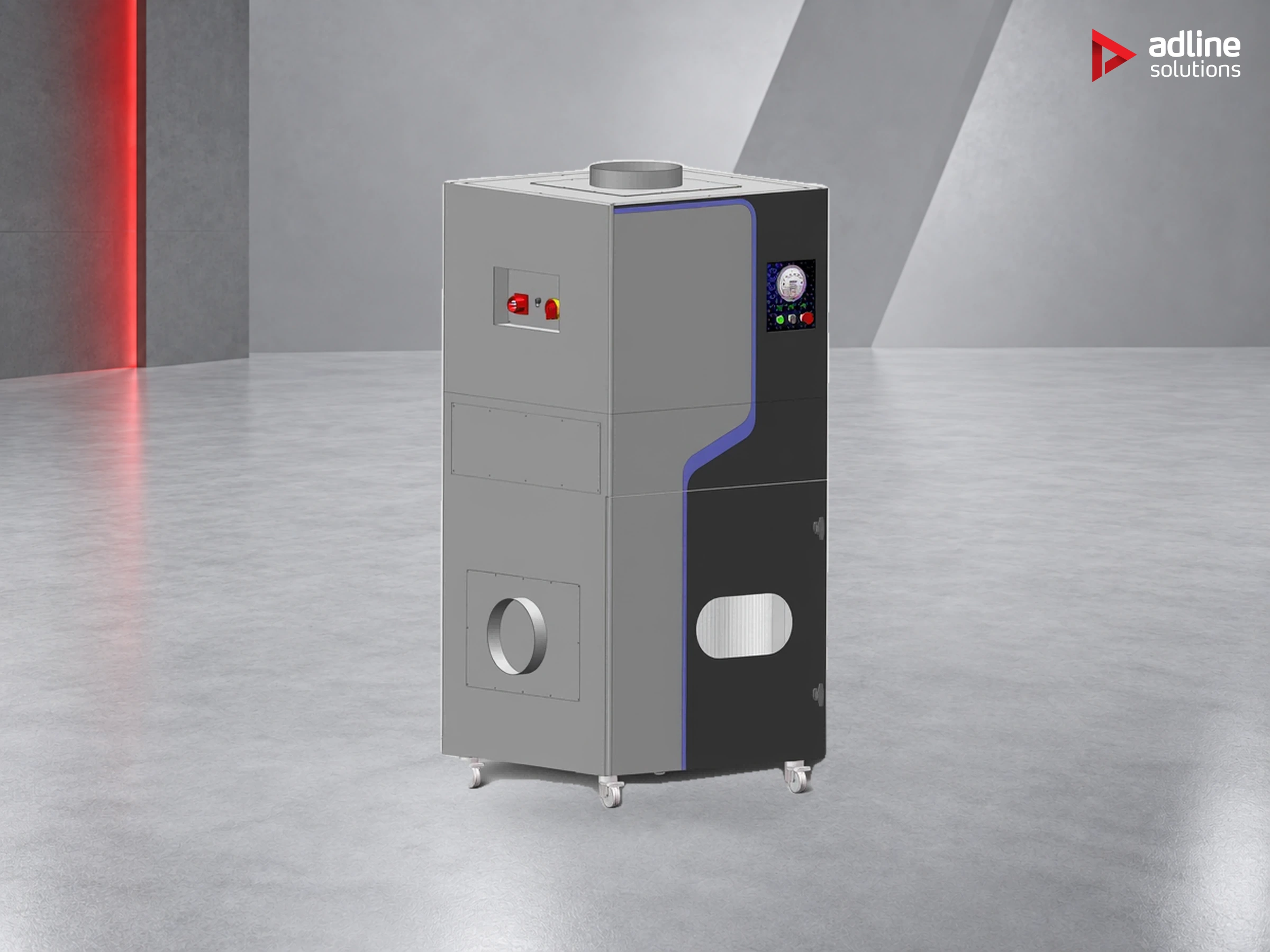
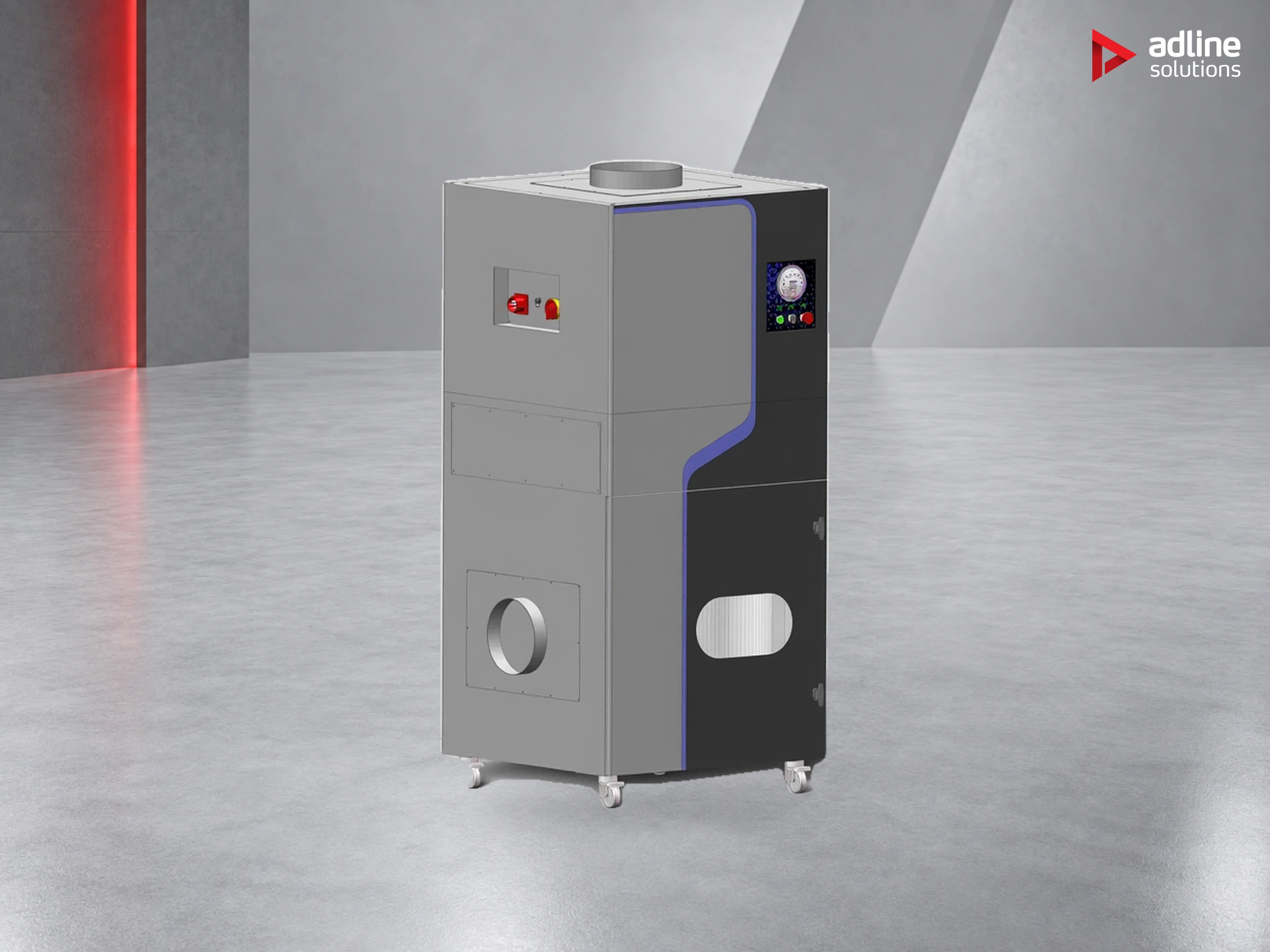
Aluminium, magnesium-aluminium alloy and titanium produce combustible dust. A conventional collector concentrates precisely the fuel and the ignition sources needed for a deflagration. The DE series is built explosion-proof throughout, with antistatic flame retardant cartridges and automatic pulse-jet cleaning. PURE-AIR states this is mandatory, not optional, for these materials and wherever flammable gases are present.
| What you process | Series | Why that one |
|---|---|---|
| Acrylic, paper, leather, textiles, resin 3D | FS | F9 pleated pre-filter |
| Wood, plywood, MDF | FGS | PTFE cartridge — sticky dust releases |
| Carbon fibre, composites, laser cleaning | DFS | Flame retardant cartridge, antistatic duct |
| Laser marking and coding | F · DS | Sub-micron fume, carbon for odour |
| Metal — one station (weld, drill, AM) | D compact | Up to 10 000 Pa at the nozzle |
| Metal — a full cutting bed | D industrial | Volume plus self-cleaning cartridges |
| Aluminium, magnesium, titanium | DE — explosion-proof | Combustible dust — required, not an upgrade |
| UV, inkjet, sublimation printing | FVS | Foam stage catches wet ink aerosol |
Then size it: the machine bed decides the airflow — 30×40 cm needs 300 m³/h, 130×250 cm needs 2400 m³/h.
Frequently asked questions
What does an explosion-proof unit need that a standard one does not?
Regular checks on the sealing of the explosion-proof joints, earth resistance kept at or below 4 Ω, the dust hopper emptied often — accumulated combustible dust is the hazard itself — and never a non-original accessory fitted to the unit.
Where does the filtered air go?
Back into the room. The mobile units are recirculating, so there is no duct to the outside and no heated air thrown away in winter. The central industrial units are ducted to the machine enclosure and need a compressed-air line for their self-cleaning cartridges.
What maintenance does it need day to day?
Check the element is seated and sealed before running. When the blockage alarm shows, replace it then — running on past it pushes fume into the fan and the control board, which turns a filter change into a repair.